
Add it to your Meals = Get a Prostate Cancer Protection

Main Points
Lycopene is mildly likely to help prevent prostate cancer. The strongest prevention evidence comes from longer-term studies that adjusted for several potential confounding factors and still found a reduced risk at higher lycopene intakes. The effect appears modest, with roughly a 16% lower risk at the highest intake levels, so lycopene should not be viewed as a dramatic solution.
The evidence is not perfectly consistent. Some research did not find a benefit, but the studies showing more favorable results tended to last longer and measured lycopene intake more carefully over time.
Lycopene may also help once prostate cancer is already diagnosed, although the evidence is more limited. Multiple randomized trials suggest possible benefits, but most were short, small, and not placebo-controlled.
Tomato sauce appears to be one of the most useful food sources. Around one standard cup per week, or two half-cup servings per week, was associated with benefit in the prevention data. Canned cooked tomatoes also appeared helpful at higher intake levels, while raw tomatoes did not show the same relationship.
Lycopene, a compound found in tomatoes, has been studied for its possible role in prostate cancer prevention and control.
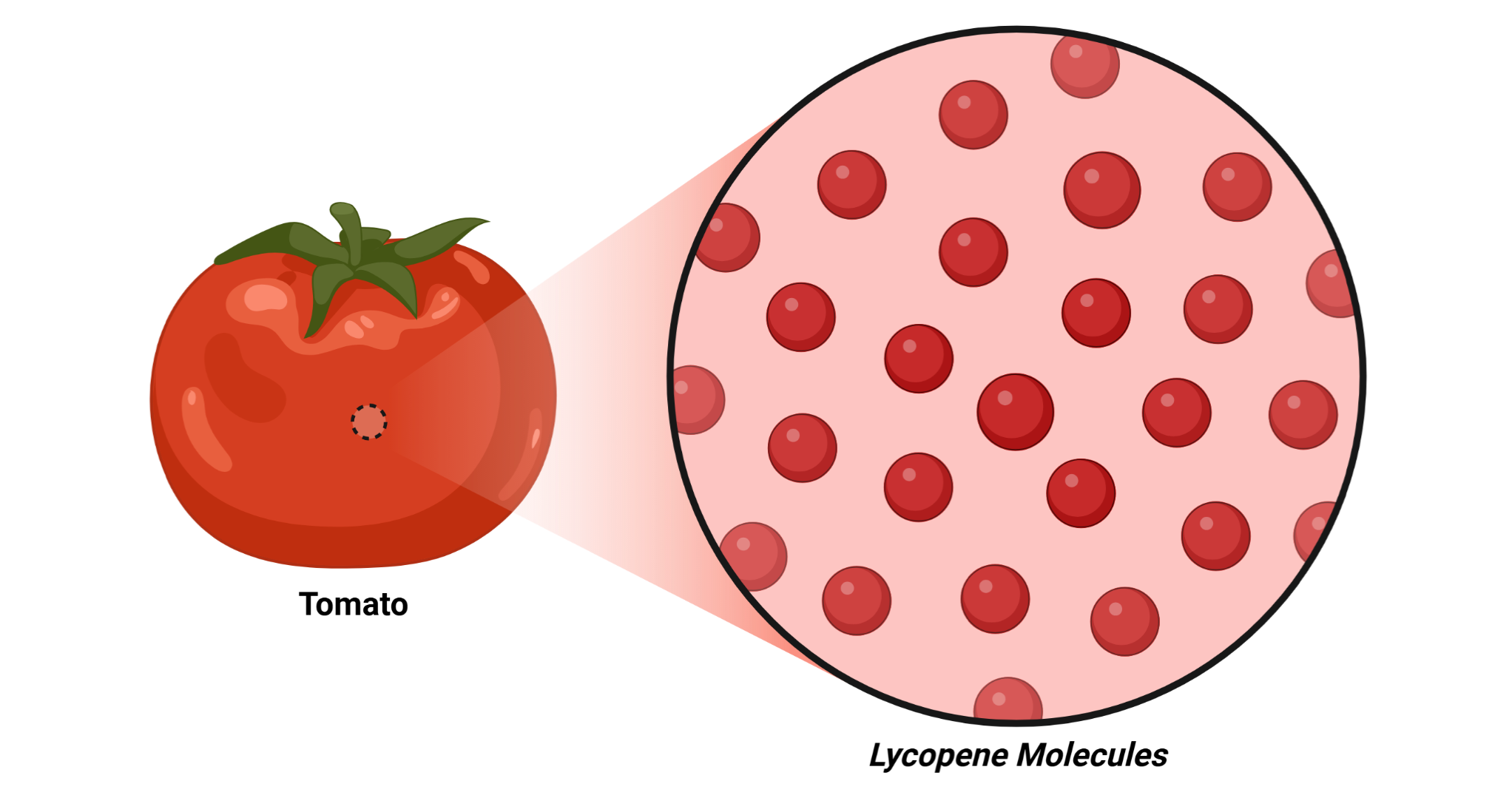
The question is not simply whether lycopene has research behind it. The more useful question is whether the evidence is consistent, strong enough to matter, and relevant only after prostate cancer develops or also before it appears.
Lycopene and Prostate Cancer Prevention
The prevention data [838, 840] are where the evidence starts to look interesting. In long-term studies that followed men who were prostate cancer-free at the beginning, higher lycopene intake was associated with a lower risk of developing prostate cancer over time.
One of the stronger findings followed men for 12 years and compared prostate cancer risk across average lycopene intake levels, from the lowest intake group to the highest. The men consuming the most lycopene had a reduced risk of prostate cancer. The reduction was not enormous, but it was meaningful enough to suggest a possible protective effect.
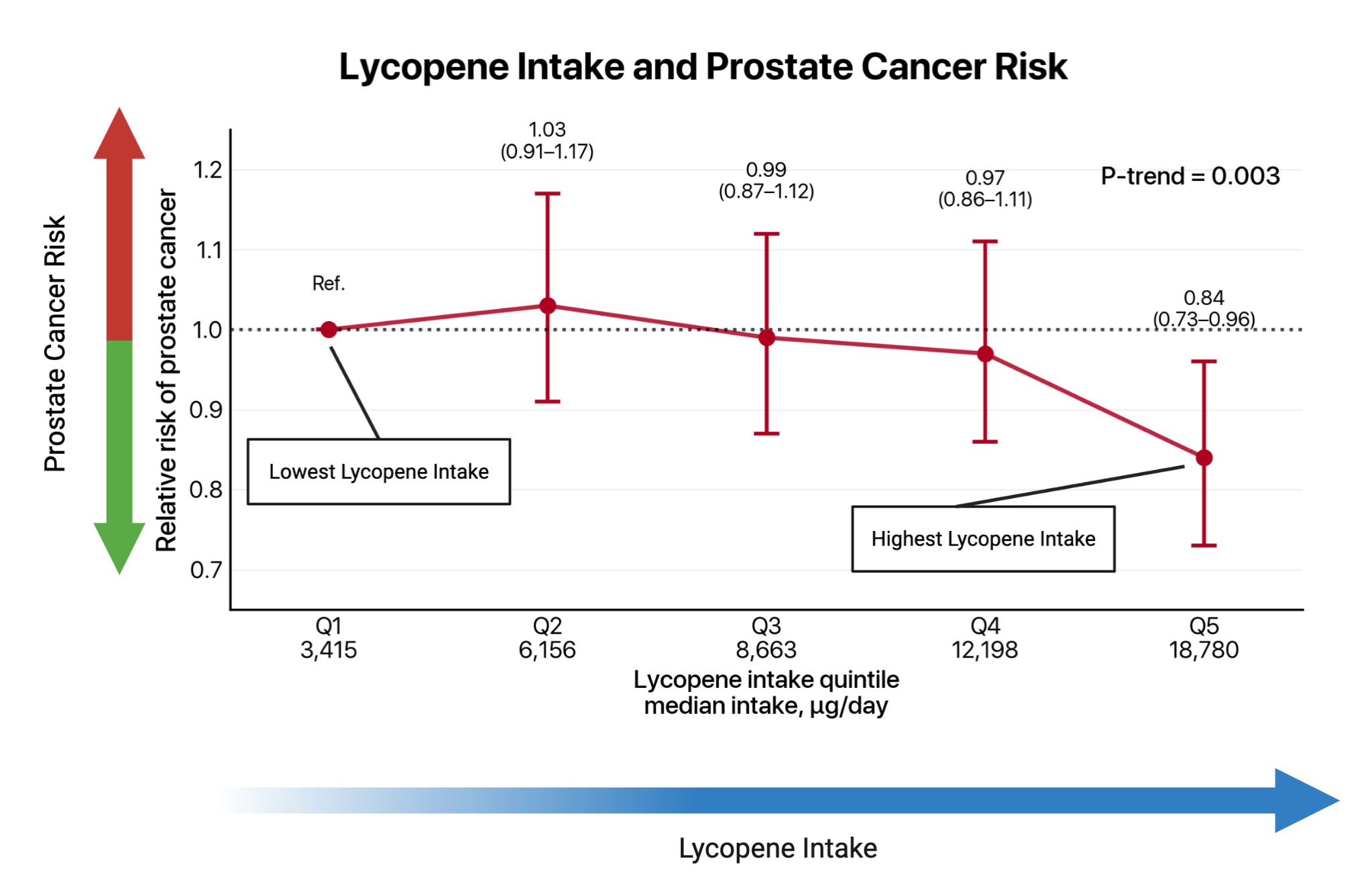
A key strength of this long-term work is that the analysis adjusted for several factors that could influence prostate cancer risk, including age, body weight, energy intake, and other fruit and vegetable intake. Physical activity, vasectomy, and other variables were also considered, but they were not included in the final adjustments when they did not appear related to prostate cancer risk.
Another study [840] added more confidence by accounting for additional factors such as benign prostate hypertrophy, PSA screenings, vegan status, alcohol intake, and other variables. Even after these potential confounders were addressed, lycopene still remained associated with reduced prostate cancer risk.
That said, the evidence is not perfectly consistent. Some research [839] did not find the same benefit. Importantly, that does not mean lycopene appeared harmful; it simply means one study did not show a protective relationship.
The differences between the studies matter. The more favorable studies lasted longer and appeared more rigorously controlled. One study [838] measured lycopene intake every four years and averaged intake over time, while the dissenting study [839] measured lycopene only at baseline. The dissenting study also lasted only four years, while the more favorable studies followed participants for much longer.
Taken together, the prevention evidence leans in favor of lycopene being mildly protective against prostate cancer. However, the effect is likely modest.
At the highest lycopene intakes, the reduced risk was around 16%, which suggests lycopene should not be viewed as a dramatic solution, but it may contribute to a small reduction in risk.
What About Men Who Already Have Prostate Cancer?
Prevention applies to men who do not currently have prostate cancer but want to reduce their overall risk. A separate question is whether lycopene may help once prostate cancer has already been diagnosed.
For that, the evidence comes from randomized controlled trials [841-845] involving people who already had prostate cancer. These trials were not massive, but there were multiple studies across different research groups.
One trial [841] gave lycopene for three weeks before prostatectomy, which is the removal of the prostate or part of the prostate. The researchers examined tumor stage, including whether the cancer was confined to the prostate or had begun to spread beyond it. A cancer confined to the prostate is generally a better sign than cancer that is no longer organ-confined.
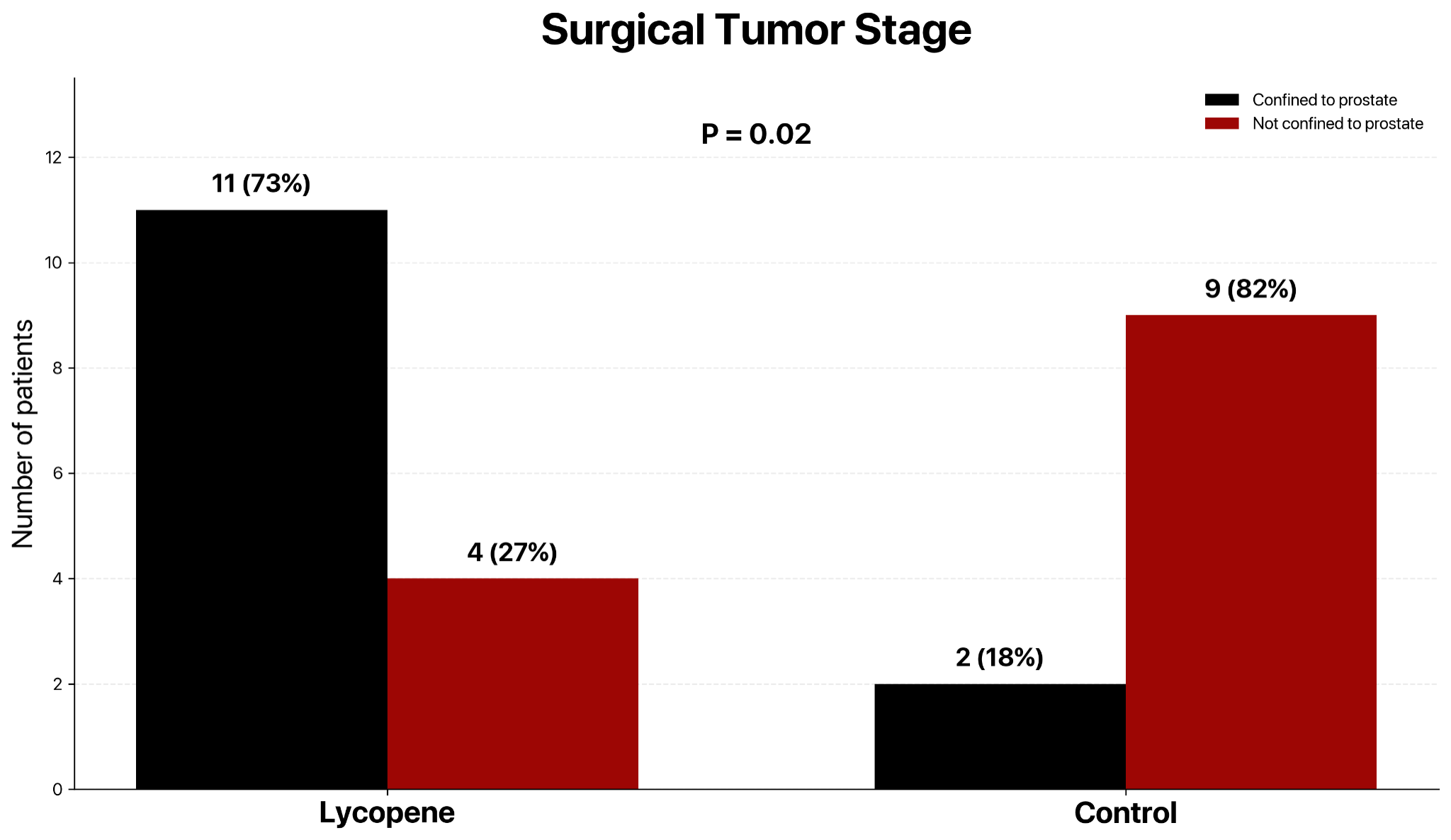
These types of measures are not as exact as some other biological markers because they rely on pathology experts categorizing tumor stage from tissue samples. That can introduce some uncertainty. Still, the assessments were blinded, which helps reduce bias, and other measures pointed in a similar direction.
Lycopene on Prostate Specific Antigen (PSA)
Lycopene on Prostate DNA Damage
Lycopene Supplementation Amounts and Sources
All of these topics are explored in depth in the complete analysis, along with access to a private podcast, live sessions, a growing research library, and practical breakdowns—available exclusively to Physionic Insiders.
Why the Cancer-Trial Evidence Still Needs Caution
The randomized trials in diagnosed prostate cancer have limitations. Most lasted only three weeks, with one exception [845]. None were placebo-controlled. Those limitations mean the results should be interpreted with some reservation.
However, short exposure is not automatically a negative point. Seeing favorable signals after only three weeks raises the question of whether longer exposure, over months or years, might produce stronger effects. That remains uncertain, but the early signals are still noteworthy.
The most reasonable conclusion is that lycopene appears to help with prostate cancer prevention and may also help control prostate cancer once it is already present. The evidence for diagnosed prostate cancer is not as strong as the prevention evidence, so more detailed and better-controlled studies would be valuable.
Food Sources and Practical Lycopene Intake
The effective amount of lycopene depends heavily on the source. Lycopene can come from tomato sauce, canned tomatoes, cooked tomatoes, and other tomato-based foods.
When studies [838] quantified tomato sauce intake, the most effective consumption level was typically two or more times per week. That equals about one standard cup of tomato sauce per week, or two servings of half a cup.
Raw tomatoes and cooked tomato products did not show the same relationship. Raw tomato intake was not linked to prostate cancer improvement, while canned cooked tomatoes showed a beneficial relationship. This may be because processing and heating improve lycopene bioavailability.
For canned cooked tomatoes, five or more servings per week appeared to be associated with reduced risk. From a food perspective, tomato sauce seemed to be the most potent option, including tomato sauce used on pasta.
Overall, lycopene does not appear to be a world-changing intervention, and better-controlled studies would still be useful. Even so, the evidence is strong enough to lean in favor of lycopene having a prostate-protective effect, both in prevention and in helping manage the spread or stress of existing prostate cancer.
Main Points
Lycopene is mildly likely to help prevent prostate cancer. The strongest prevention evidence comes from longer-term studies that adjusted for several potential confounding factors and still found a reduced risk at higher lycopene intakes. The effect appears modest, with roughly a 16% lower risk at the highest intake levels, so lycopene should not be viewed as a dramatic solution.
The evidence is not perfectly consistent. Some research did not find a benefit, but the studies showing more favorable results tended to last longer and measured lycopene intake more carefully over time.
Lycopene may also help once prostate cancer is already diagnosed, although the evidence is more limited. Multiple randomized trials suggest possible benefits, but most were short, small, and not placebo-controlled.
Tomato sauce appears to be one of the most useful food sources. Around one standard cup per week, or two half-cup servings per week, was associated with benefit in the prevention data. Canned cooked tomatoes also appeared helpful at higher intake levels, while raw tomatoes did not show the same relationship.
Lycopene on Prostate Specific Antigen (PSA)
Lycopene on Prostate DNA Damage
Lycopene Supplementation Amounts and Sources
All of these topics are explored in depth in the complete analysis, along with access to a private podcast, live sessions, a growing research library, and practical breakdowns—available exclusively to Physionic Insiders.
Dr. Nicolas Verhoeven, PhD / Physionic
References
[Study 838] Giovannucci E, Rimm EB, Liu Y, Stampfer MJ, Willett WC. A prospective study of tomato products, lycopene, and prostate cancer risk. J Natl Cancer Inst. 2002;94(5):391-398. doi:10.1093/jnci/94.5.391
Funding/Conflicts: Public Funding: From the study, the work was supported by NIH grants CA55075 from the National Cancer Institute and HL35464 from the National Heart, Lung, and Blood Institute; Non-Profit Funding: From the study, no non-profit funding source was reported in the accessible article record; Industry Funding: From the study, no industry funding source was reported in the accessible article record, and no conflict-of-interest statement was found in the accessible article record/abstract.
[Study 839] Kirsh VA, Mayne ST, Peters U, et al. A prospective study of lycopene and tomato product intake and risk of prostate cancer. Cancer Epidemiol Biomarkers Prev. 2006;15(1):92-98. doi:10.1158/1055-9965.EPI-05-0563
Funding/Conflicts: Public Funding: From the study, the work was supported by the Intramural Research Program of the NIH/National Cancer Institute; Non-Profit Funding: From the study, no non-profit funding source was reported in the accessible article record; Industry Funding: From the study, no industry funding source was reported in the accessible article record, and no conflict-of-interest statement was found in the accessible article record.
[Study 840] Fraser GE, Jacobsen BK, Knutsen SF, Mashchak A, Lloren JI. Tomato consumption and intake of lycopene as predictors of the incidence of prostate cancer: the Adventist Health Study-2. Cancer Causes Control. 2020;31(4):341-351. doi:10.1007/s10552-020-01279-z
Funding/Conflicts: Public Funding: From the study, the present analyses were supported by National Cancer Institute grant 5R01 CA094594 to the Adventist Health Study; Non-Profit Funding: From the study, the work was also supported by World Cancer Research Fund grant 2009/93, and the funding agencies had no further role in data collection, statistical analysis, or writing; Industry Funding: From the study, no industry funding source was reported, and all authors declared that they had no conflict of interest.
[Study 841] Kucuk O, Sarkar FH, Sakr W, et al. Phase II randomized clinical trial of lycopene supplementation before radical prostatectomy. Cancer Epidemiol Biomarkers Prev. 2001;10(8):861-868.
Funding/Conflicts: Public Funding: From the study, no public funding source was reported; Non-Profit Funding: From the study, the study was supported by a Virtual Discovery Grant from the Barbara Ann Karmanos Cancer Institute, Detroit, Michigan; Industry Funding: From the study, no industry funding source was reported, the lycopene capsules were Lyc-O-Mato products from LycoRed Natural Products Industries but the study did not state they were donated or industry-funded, and no conflict-of-interest statement was found in the accessible article text.
[Study 842] Bowen P, Chen L, Stacewicz-Sapuntzakis M, et al. Tomato sauce supplementation and prostate cancer: lycopene accumulation and modulation of biomarkers of carcinogenesis. Exp Biol Med (Maywood). 2002;227(10):886-893. doi:10.1177/153537020222701008
Funding/Conflicts: Public Funding: From the study, no public funding source was found in the accessible article text; Non-Profit Funding: From the study, no non-profit funding source was found in the accessible article text; Industry Funding: From the study, no industry funding source was reported, Hunt’s Spaghetti Sauce and Lyc-O-Mato were named as study products, but the article did not state that these products were donated or industry-funded, and no conflict-of-interest statement was found in the accessible article text.
[Study 843] Kim HS, Bowen P, Chen L, et al. Effects of tomato sauce consumption on apoptotic cell death in prostate benign hyperplasia and carcinoma. Nutr Cancer. 2003;47(1):40-47. doi:10.1207/s15327914nc4701_5
Funding/Conflicts: Public Funding: From the study, no public funding source was found in the accessible article record/abstract; Non-Profit Funding: From the study, no non-profit funding source was found in the accessible article record/abstract; Industry Funding: From the study, no industry funding source was found in the accessible article record/abstract, Hunt’s tomato sauce was used as the intervention food but the accessible record did not state that it was donated or industry-funded, and no conflict-of-interest statement was found in the accessible article record/abstract.
[Study 844] Kumar NB, Besterman-Dahan K, Kang L, et al. Results of a Randomized Clinical Trial of the Action of Several Doses of Lycopene in Localized Prostate Cancer: Administration Prior to Radical Prostatectomy. Clin Med Urol. 2008;1:1-14. doi:10.4137/cmu.s718
Funding/Conflicts: Public Funding: From the study, the research was funded by the National Institute of Health—National Cancer Institute grant U10 CA81920; Non-Profit Funding: From the study, no non-profit funding source was reported; Industry Funding: From the study, no industry funding source was reported, lycopene was supplied by Healthy Origins as Lyc-O-Mato 15 mg soft gel capsules from LycoRed Natural Products Industries, and no conflict-of-interest statement was found in the accessible article text.
[Study 845] Vaishampayan U, Hussain M, Banerjee M, et al. Lycopene and soy isoflavones in the treatment of prostate cancer. Nutr Cancer. 2007;59(1):1-7. doi:10.1080/01635580701413934
Funding/Conflicts: Public Funding: From the study, no public funding source was found in the accessible article text; Non-Profit Funding: From the study, no non-profit funding source was found in the accessible article text; Industry Funding: From the study, LycoRed and Solbar Companies supplied the study lycopene and soy isoflavone capsules, and no conflict-of-interest statement was found in the accessible article text.