
Dietary Iron Consumption and Colorectal Cancer: What a Scientific Nightmare!

Main Points
Some colorectal cancer cells appear unusually capable of tolerating iron exposure. Normally, free iron can trigger reactive molecule damage and ferroptosis, but colorectal cancer cells may avoid this form of cell death.
In people who already have colorectal cancer, higher expression of iron uptake genes is associated with worse survival. This may reflect greater iron uptake, but the evidence is a simple association and cannot prove that iron itself is the direct cause.
For colorectal cancer occurrence, the literature is mixed. Several studies suggest higher heme iron intake is linked with increased colorectal cancer risk, while two studies do not show that relationship. One of the stronger cohort-based studies found no clear increase in risk.
Even when an increased risk is identified, the effect appears modest rather than dramatic. One meta-analysis found an 18% increased risk when comparing the highest heme iron consumers with the lowest.
Alcohol may strengthen the relationship between heme iron and colorectal cancer risk in some studies, but it does not fully explain why the literature disagrees.
The most cautious conclusion is that heme iron does not appear beneficial for colorectal cancer risk. Some evidence suggests no relationship, while other evidence suggests a modest increase in risk. For people with already established colorectal cancer, the evidence is still early but leans imperfectly toward heme iron possibly supporting cancer cell survival.
A newer line of research [858] suggests that some colorectal cancers may have a particular dependence on heme iron. The word “dependence” is important because the relationship appears more specific than simple exposure to iron. The broader question, however, is not only whether colorectal cancer cells can use heme iron, but whether dietary heme iron meaningfully changes colorectal cancer risk or progression.
The evidence is intriguing, but imperfect. Some findings suggest that heme iron may help certain colorectal cancer cells survive and grow. Other evidence looking at colorectal cancer occurrence in people without the disease is mixed, with several studies suggesting increased risk and others showing no clear relationship.
Heme Iron, Oxidative Stress, and Ferroptosis
When cells are exposed to heme, or free iron, they can produce large amounts of reactive molecules. These reactive molecules can interact with different parts of the cell and damage their structure
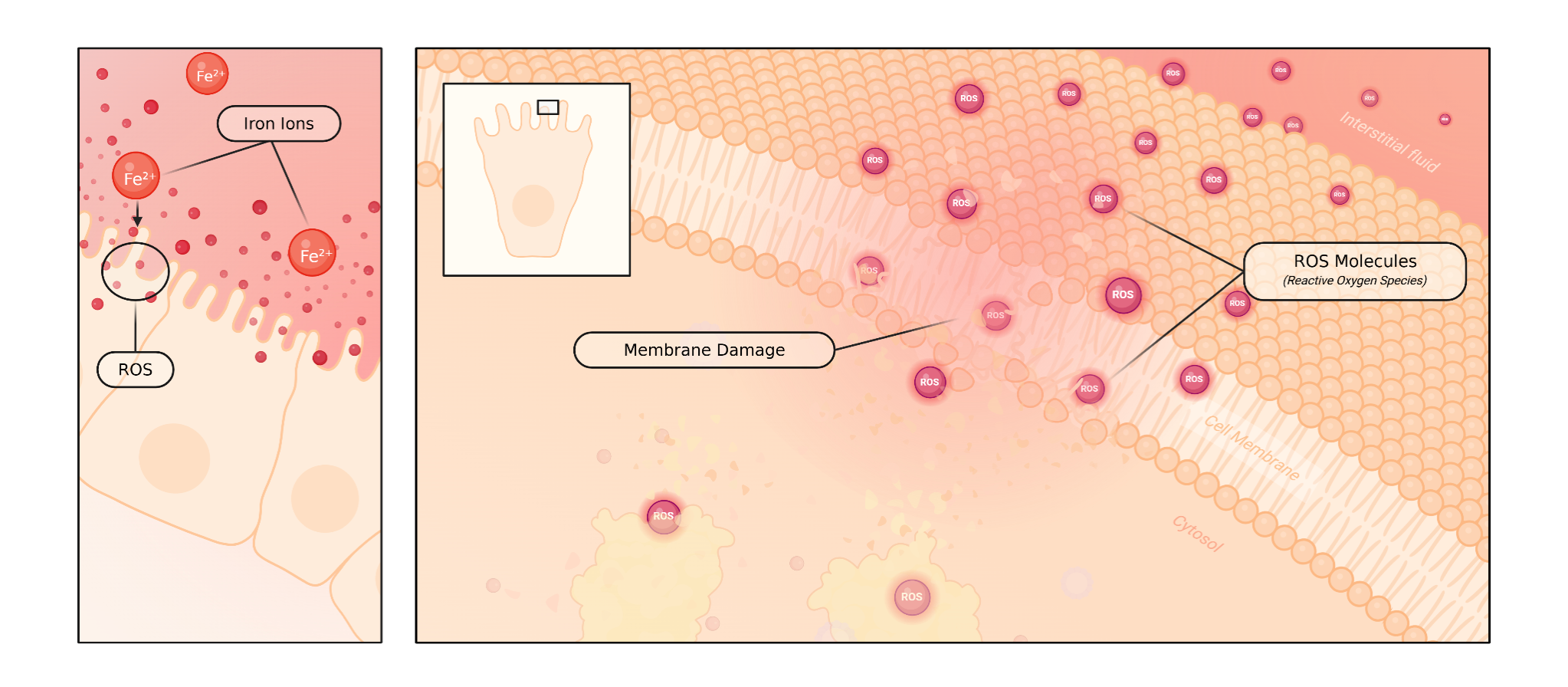
When the damage becomes severe enough, cells may undergo ferroptosis, a form of cell death involving iron-driven injury to the cell membrane. The cell membrane separates the inside of the cell from the outside. When iron-related damage creates holes in that membrane, the cell can no longer maintain its integrity and eventually dies.
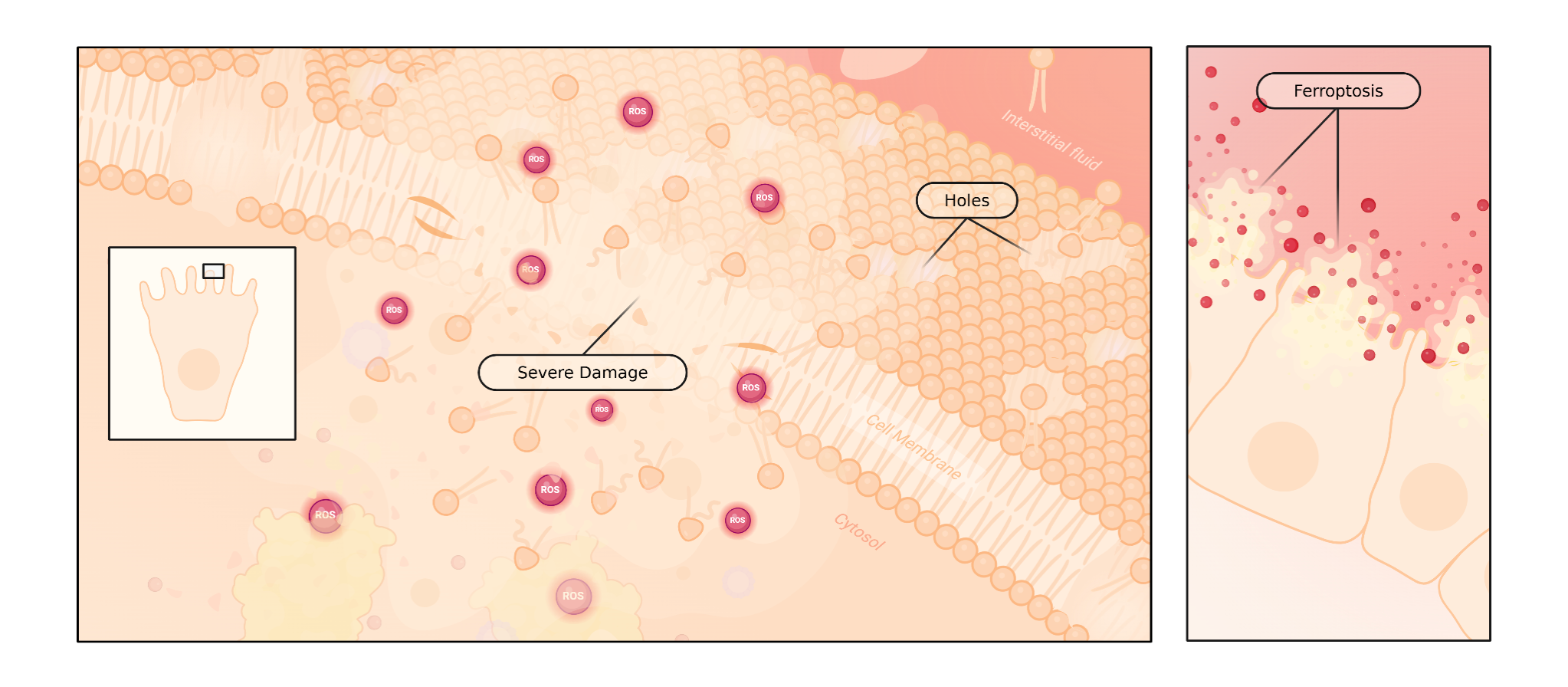
That is what would typically be expected when cells are exposed to high levels of reactive iron. Yet colorectal cancer cells appear to respond differently. When they are exposed to iron, they do not necessarily experience the same destructive trauma.
Iron Uptake Genes and Survival in Colorectal Cancer
In people who already have colorectal cancer, survival data add another layer to the story. Individuals whose cancer cells show higher expression of iron uptake genes appear to have worse survival than those whose cancer cells do not show elevated expression of those genes.
These iron uptake genes suggest that the cancer cells may be reading or producing more proteins related to heme iron uptake into the cancer cell. In the survival data, people with lower expression of these iron-related genes survived longer.
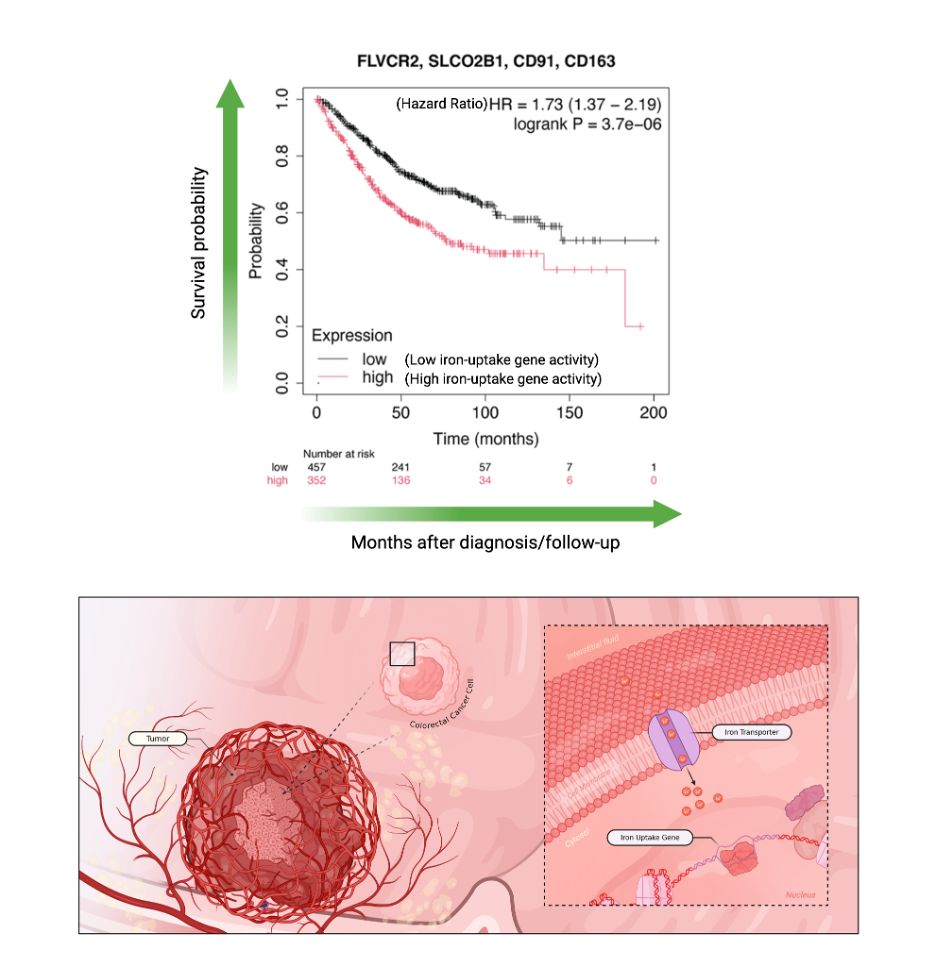
However, this evidence should be interpreted cautiously. It could mean that the cancer cells are taking up more iron, but it is also possible that the proteins themselves have harmful effects independent of iron. The data are also associative, meaning they do not fully account for other factors that may influence survival.
At this stage, the most reasonable interpretation is that some colorectal cancer cells may depend on heme iron to grow and possibly thrive. There is also a simple association between higher expression of iron uptake genes in colorectal cancer and a greater risk of premature death.
Colorectal Cancer Occurrence: The Evidence Becomes Mixed
The next question is different: What about people who do not already have colorectal cancer? Does heme iron intake increase the risk of developing colorectal cancer?
Here, the evidence becomes much more mixed. Several studies [860, 862-866] found an increased risk of colorectal cancer with higher heme iron exposure, while two studies [859,861] did not identify that relationship.
It may be tempting to follow the side with the greater number of studies, but that is not necessarily the best approach. Some research is considered stronger because it follows people over long periods and tracks their data carefully.
One study using the Nurses’ Health Study [859] and Health Professionals cohorts found no increased colorectal cancer risk from heme iron intake. In that study, even the group with the highest heme iron intake did not show a clear increase in colorectal cancer risk compared with the lower intake groups. The results did not identify a relationship between heme iron consumption and increased colorectal cancer risk.
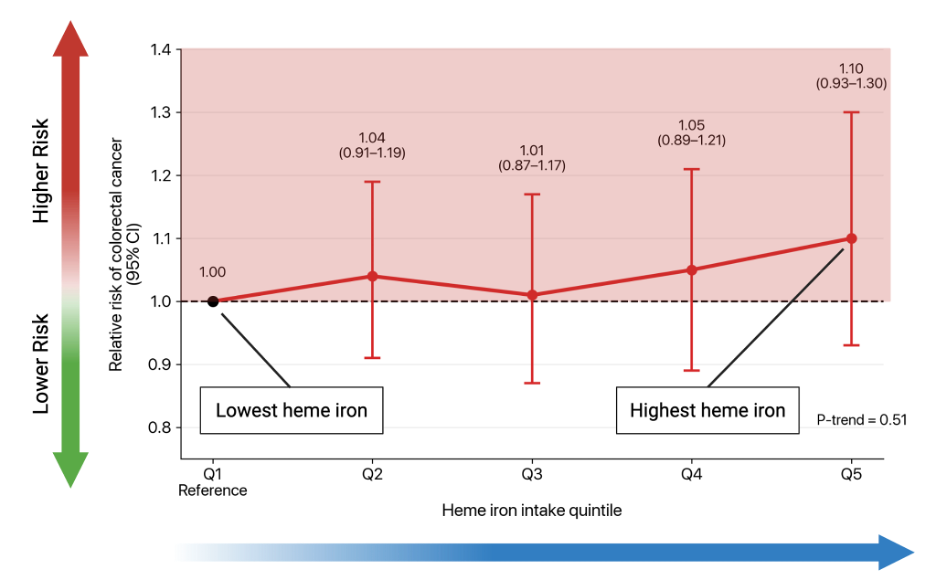
Yet meta-analyses, which combine multiple studies, point in the opposite direction. One meta-analysis found that people with the highest heme iron intake had a higher risk of colorectal cancer compared with those with the lowest intake.
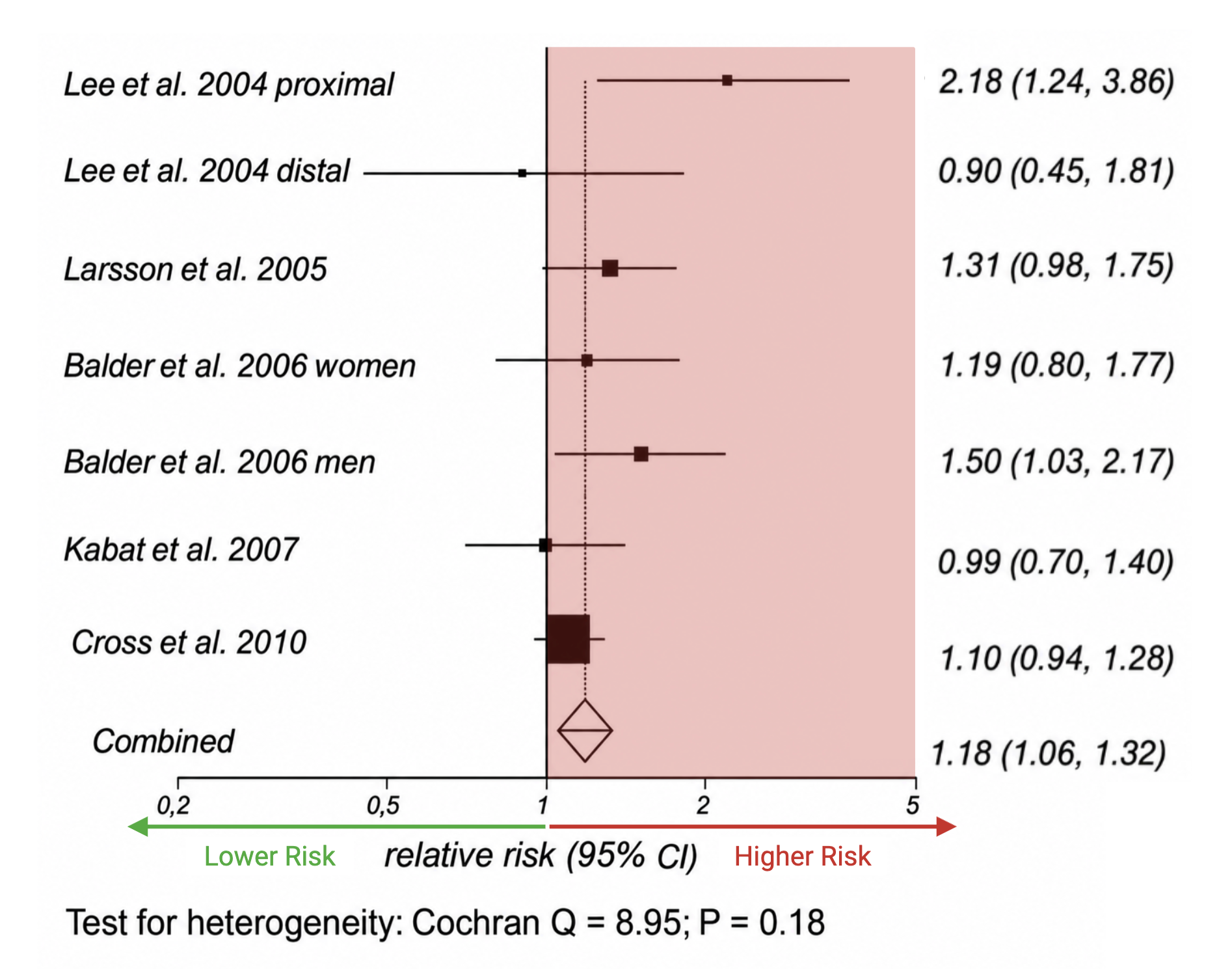
Unfortunately, the evidence does not resolve neatly when looking at cancer occurrence. The best-conducted data may show no relationship, while the broader pooled evidence suggests a modest increase in risk.
Thriving Colorectal Cancer through Mitochondria and Iron
Zinc and Colorectal Cancer
The ‘Chlorophyll Ratio’
All of these topics are explored in depth in the complete analysis, along with access to a private podcast, live sessions, a growing research library, and practical breakdowns—available exclusively to Physionic Insiders.
Why the Studies May Disagree
Several explanations may help account for the conflicting findings.
Alcohol is one possibility. Some studies [862] found that higher alcohol consumption combined with higher heme iron intake had a stronger relationship with increased colorectal cancer risk. However, alcohol does not fully explain the disagreement because the study [859] that found no heme iron relationship also examined alcohol and did not find the same pattern.
Another possibility is that the low and high heme iron groups in the dissenting study may not have been different enough from each other. If two groups consume relatively similar amounts of heme iron, detecting a meaningful difference becomes difficult. That explanation may apply when compared with some older studies, but it does not fully explain the disagreement because another study [861] with wider differences in intake also found no increased risk.
This leaves the overall picture uncertain. Alcohol and narrow intake differences may contribute to some of the disagreement, but they do not appear to be the main explanation.
What Can We Take Away?
The evidence does not allow for a definitive conclusion. Heme iron has not been shown to reduce colorectal cancer risk. At best, some evidence suggests no relationship. At worst, several studies and meta-analyses suggest a modest increase in risk.
That distinction matters. The current evidence does not suggest that heme iron is strongly associated with colorectal cancer. Even the meta-analysis [860] showing increased risk found only an 18% increase, and most studies that identify a relationship suggest a relatively modest elevation in risk. The exception may be when higher heme iron intake is paired with significant daily alcohol consumption.
This means the decision becomes a matter of how a person interprets uncertain risk. For some, the evidence may be enough to justify keeping an eye on heme iron intake. For others, the uncertainty and modest risk increase may not place it among their highest concerns.
It is also important not to confuse colorectal cancer occurrence with colorectal cancer progression. Most of the evidence discussed here focuses on the risk of developing colorectal cancer in the first place. The initial mechanistic evidence involving iron uptake and cancer cell survival applies to people with already established colorectal cancer.
The evidence on heme iron and the possible acceleration of already present colorectal cancer is still young and incomplete. It may be even less understood than the prevention data. Still, the early findings are intriguing and suggest a possible role for heme iron in helping certain colorectal cancers survive.
Main Points
Some colorectal cancer cells appear unusually capable of tolerating iron exposure. Normally, free iron can trigger reactive molecule damage and ferroptosis, but colorectal cancer cells may avoid this form of cell death.
In people who already have colorectal cancer, higher expression of iron uptake genes is associated with worse survival. This may reflect greater iron uptake, but the evidence is a simple association and cannot prove that iron itself is the direct cause.
For colorectal cancer occurrence, the literature is mixed. Several studies suggest higher heme iron intake is linked with increased colorectal cancer risk, while two studies do not show that relationship. One of the stronger cohort-based studies found no clear increase in risk.
Even when an increased risk is identified, the effect appears modest rather than dramatic. One meta-analysis found an 18% increased risk when comparing the highest heme iron consumers with the lowest.
Alcohol may strengthen the relationship between heme iron and colorectal cancer risk in some studies, but it does not fully explain why the literature disagrees.
The most cautious conclusion is that heme iron does not appear beneficial for colorectal cancer risk. Some evidence suggests no relationship, while other evidence suggests a modest increase in risk. For people with already established colorectal cancer, the evidence is still early but leans imperfectly toward heme iron possibly supporting cancer cell survival.
Thriving Colorectal Cancer through Mitochondria and Iron
Zinc and Colorectal Cancer
The ‘Chlorophyll Ratio’
All of these topics are explored in depth in the complete analysis, along with access to a private podcast, live sessions, a growing research library, and practical breakdowns—available exclusively to Physionic Insiders.
Dr. Nicolas Verhoeven, PhD / Physionic
References
[Study 858] Jain C, Essani M, Kumar R, et al. Iron-addicted colorectal cancers exploit heme-complex II axis to resist oxidative cell death. Cell Metab. 2026;38:1-19. doi:10.1016/j.cmet.2026.04.020
Funding/Conflicts: Public Funding: From the study, the work was funded by NIH grants R01 CA148828, R35 GM130183, R37 CA237421, R01 CA248160, R01 CA244931, P30 CA046592, T32 GM150581, F99 CA284256-01, T32 CA009357, and 1F31 DK143736-01; Non-Profit Funding: From the study, support was also provided by the Rackham Barbour Fellowship, Crohn’s and Colitis Foundation Research Fellow Award 623914, University of Michigan Pioneers Fellowship, and the Paradifference Foundation; Industry Funding: From the study, no industry funding source was reported, but the declaration of interests stated that C.A.L. served as a consultant for Astellas Pharmaceuticals, Odyssey Therapeutics, Third Rock Ventures, and T-Knife Therapeutics, held patents related to cancer metabolism/redox mechanisms, and R.B. served as a consultant for Zyphore Therapeutics and Alnylum Pharmaceuticals.
[Study 859] Zhang X, Giovannucci EL, Smith-Warner SA, et al. A prospective study of intakes of zinc and heme iron and colorectal cancer risk in men and women. Cancer Causes Control. 2011;22(12):1627-1637. doi:10.1007/s10552-011-9839-z
Funding/Conflicts: Public Funding: From the study, the work was supported by NIH grants CA87969 and CA55075; Non-Profit Funding: From the study, no non-profit funding source was reported; Industry Funding: From the study, no industry funding source was reported, the conflict-of-interest statement reported none, and the funders had no role in study design, study conduct, data collection, data management, data analysis, data interpretation, or manuscript preparation, review, or approval.
[Study 860] Bastide NM, Pierre FHF, Corpet DE. Heme iron from meat and risk of colorectal cancer: a meta-analysis and a review of the mechanisms involved. Cancer Prev Res (Phila). 2011;4(2):177-184. doi:10.1158/1940-6207.CAPR-10-0113
Funding/Conflicts: Public Funding: From the study, no public funding source was reported in the accessible article text; Non-Profit Funding: From the study, no non-profit funding source was reported in the accessible article text; Industry Funding: From the study, no industry funding source was reported, the acknowledgments only thanked Luc Dauchet and Daphne Goodfellow, and no conflict-of-interest statement was found in the accessible article text.
[Study 861] Kabat GC, Miller AB, Jain M, Rohan TE. A cohort study of dietary iron and heme iron intake and risk of colorectal cancer in women. Br J Cancer. 2007;97(1):118-122. doi:10.1038/sj.bjc.6603837
Funding/Conflicts: Public Funding: From the study, the work was supported in part by the National Cancer Institute of Canada; Non-Profit Funding: From the study, no non-profit funding source was reported; Industry Funding: From the study, no industry funding source was reported, and no conflict-of-interest statement was found in the accessible article text.
[Study 862] Lee DH, Anderson KE, Harnack LJ, Folsom AR, Jacobs DR Jr. Heme iron, zinc, alcohol consumption, and colon cancer: Iowa Women’s Health Study. J Natl Cancer Inst. 2004;96(5):403-407.
Funding/Conflicts: Public Funding: From the study, the Iowa Women’s Health Study was funded by Public Health Service/National Cancer Institute grant R01 CA39742; Non-Profit Funding: From the study, no non-profit funding source was reported; Industry Funding: From the study, no industry funding source was reported, and no conflict-of-interest statement was found in the accessible article record.
[Study 863] Balder HF, de Vogel J, Jansen MCJF, et al. Heme and chlorophyll intake and risk of colorectal cancer in the Netherlands Cohort Study. Cancer Epidemiol Biomarkers Prev. 2006;15(4):717-725. doi:10.1158/1055-9965.EPI-05-0772
Funding/Conflicts: Public Funding: From the study, no public funding source was reported; Non-Profit Funding: From the study, grant support was provided by the Wageningen Centre for Food Sciences; Industry Funding: From the study, no industry funding source was reported, and no conflict-of-interest statement was found in the accessible article text.
[Study 864] Larsson SC, Adami HO, Giovannucci E, Wolk A. Re: Heme iron, zinc, alcohol consumption, and risk of colon cancer. J Natl Cancer Inst. 2005;97(3):232-233. doi:10.1093/jnci/dji032.
Funding/Conflicts: Public Funding: From the study, support was provided by research grants from the Swedish Research Council/Longitudinal Studies; Non-Profit Funding: From the study, support was also provided by the Swedish Cancer Foundation and the Swedish Foundation for International Cooperation in Research and Higher Education; Industry Funding: From the study, no industry funding source was reported, and no conflict-of-interest statement was found in the accessible article text.
[Study 865] Cross AJ, Ferrucci LM, Risch A, Graubard BI, Ward MH, Park Y, Hollenbeck AR, Schatzkin A, Sinha R. A large prospective study of meat consumption and colorectal cancer risk: an investigation of potential mechanisms underlying this association. Cancer Res. 2010;70(6):2406-2414. doi:10.1158/0008-5472.CAN-09-3929.
Funding/Conflicts: Public Funding: From the study, the work was supported by the Intramural Research Program of the National Cancer Institute, NIH; Non-Profit Funding: From the study, no non-profit funding source was reported; Industry Funding: From the study, no industry funding source was reported, and the article stated that no potential conflicts of interest were disclosed.
[Study 866] Aglago EK, Cross AJ, Riboli E, et al. Dietary intake of total, heme and non-heme iron and the risk of colorectal cancer in a European prospective cohort study. Br J Cancer. 2023;128(8):1529-1540. doi:10.1038/s41416-023-02164-7
Funding/Conflicts: Public Funding: From the study, internal funds from the International Agency for Research on Cancer supported the analyses, and EPIC/national cohorts were supported by several public agencies including IARC, INSERM, DKFZ/DIfE/BMBF, the Dutch Ministry of Public Health, Welfare and Sports, Instituto de Salud Carlos III, regional Spanish governments, the Swedish Research Council, Region Skåne, Region Västerbotten, and the UK Medical Research Council; Non-Profit Funding: From the study, EPIC/national cohort support also came from non-profit organizations including the Danish Cancer Society, Ligue Contre le Cancer, German Cancer Aid, Associazione Italiana per la Ricerca sul Cancro, Compagnia di SanPaolo, World Cancer Research Fund, Swedish Cancer Society, and Cancer Research UK; Industry Funding: From the study, no industry funding source was reported, the funders had no role in study design, data collection and analysis, decision to publish, or manuscript preparation, and the authors declared no competing interests.