
‘High Dose Vitamin D’s Steroid-like Effect! Crazy!’

Main Points
Claim: Vitamin D supplementation changes two key hormones related to muscle and metabolism.
Conclusion: Vitamin D did change leptin and myostatin in mice, but those shifts did not clearly lead to meaningful changes in body weight, food intake, or lean mass.
Claim: Vitamin D increases muscle mass and redirects how the body uses calories.
Conclusion: In mice, very high vitamin D was linked to more lean mass, better grip strength, less fat, and higher metabolism. But that still does not prove the same effect in humans.
Claim: People with more vitamin-D-related genetics grow more and have an advantage.
Conclusion: Higher lifelong vitamin D genetics were linked to greater height, but that is not the same as improved muscle growth or metabolism in adults.
Claim: High-dose vitamin D is a proven strategy for muscle growth and metabolic improvement in humans.
Conclusion: The evidence does not convincingly prove that
Welcome back to the Centrifuge - where we separate fiction from fact by applying studies to claims made on health shows. In this episode, Mr. Thomas DeLauer, an expert in nutrition, fitness, and mindset, discusses how mass doses of vitamin D can have unbelievable results on our muscle growth, fat mass, and metabolism.
The core claims are:
Vitamin D supplementation changes two key hormones related to muscle and metabolism
Vitamin D increases muscle mass and redirects how the body uses calories
People with more Vitamin D related genetics grow more and have an advantage
Claim 1: Vitamin D supplementation changes two key hormones related to muscle and metabolism
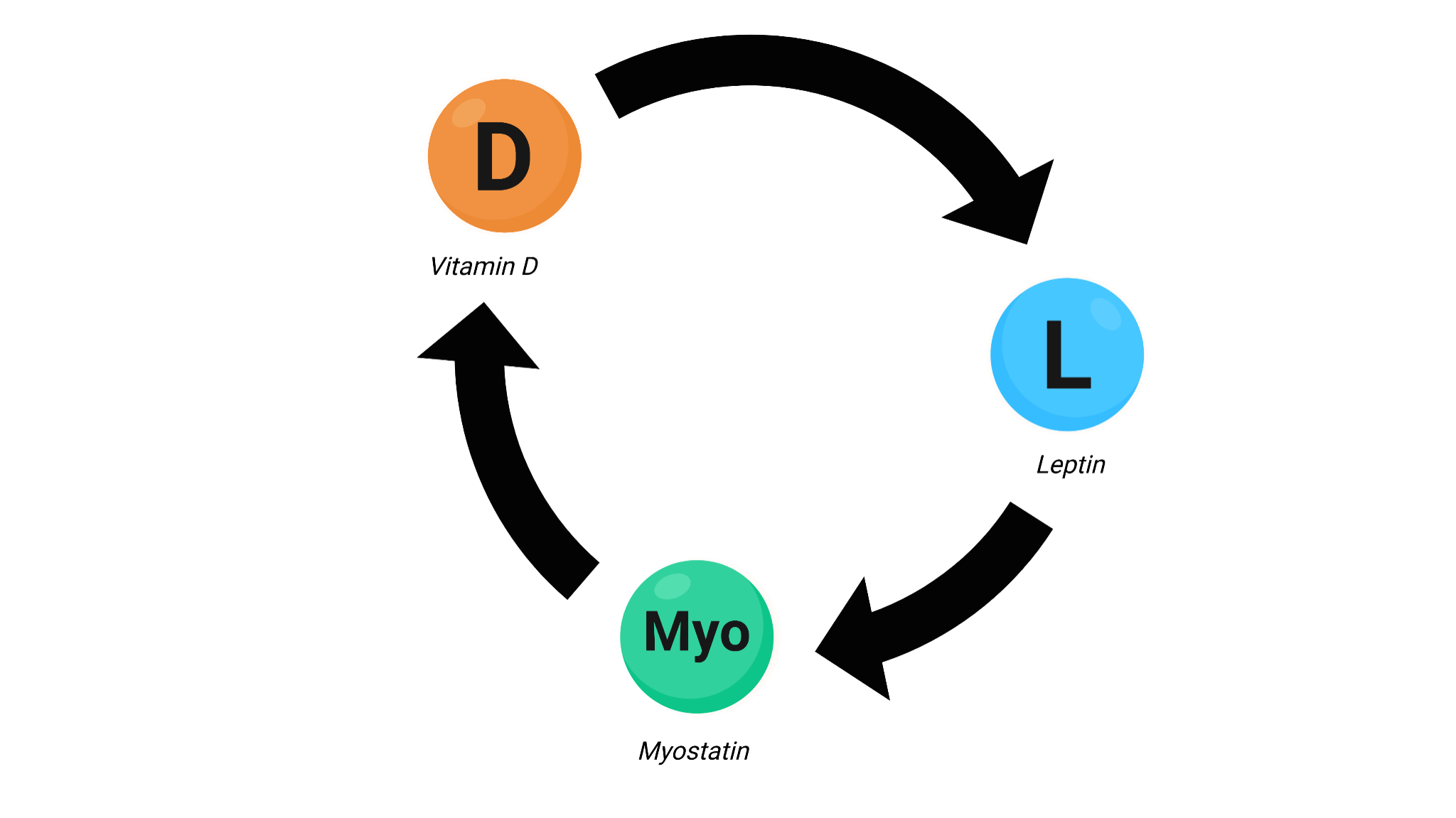
The first claim is that vitamin D changes two hormones that matter for muscle and metabolism: leptin and myostatin.
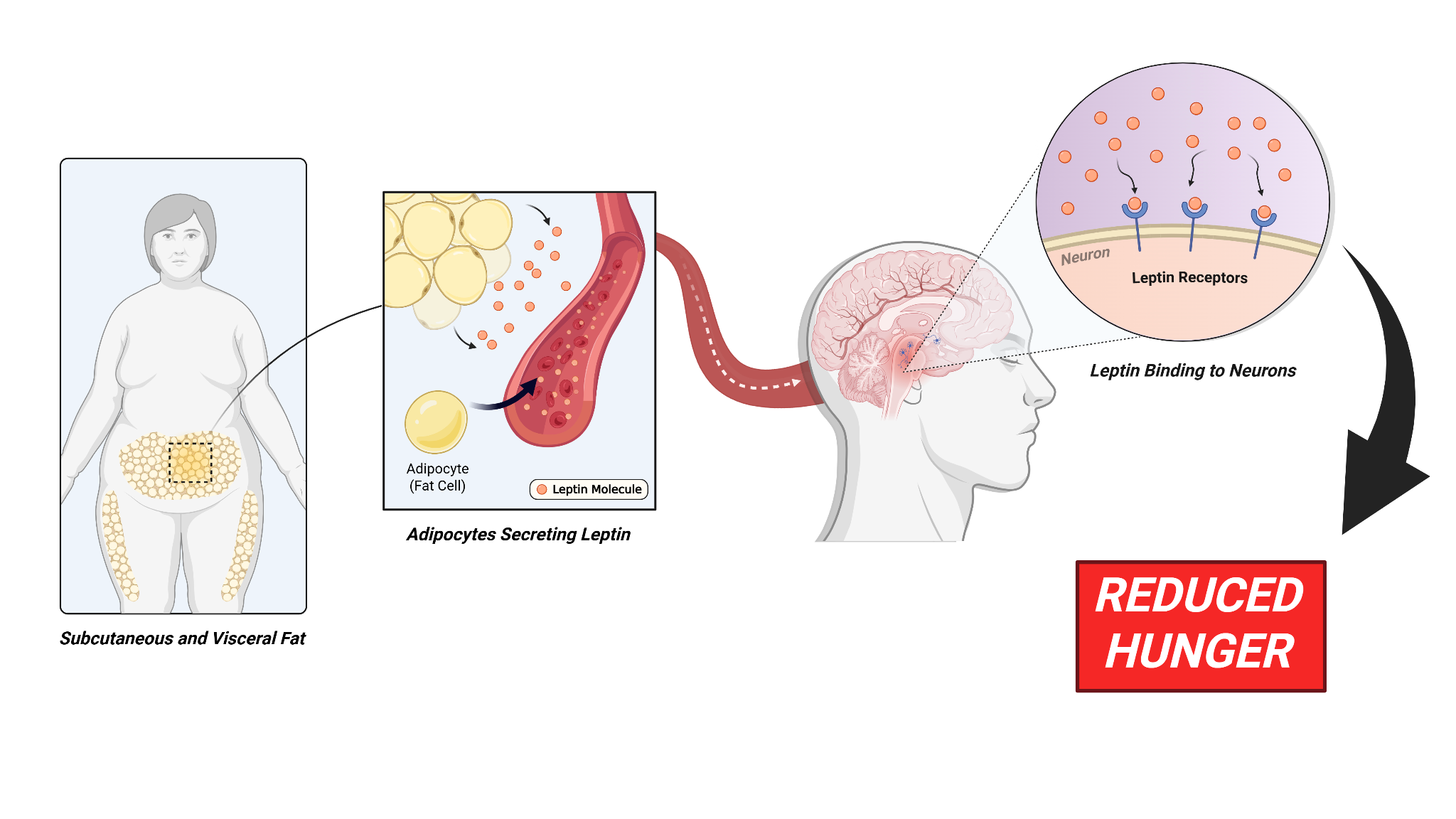
Leptin is a hormone released mostly by fat tissue that helps signal to the brain that enough energy is stored in the body [1].
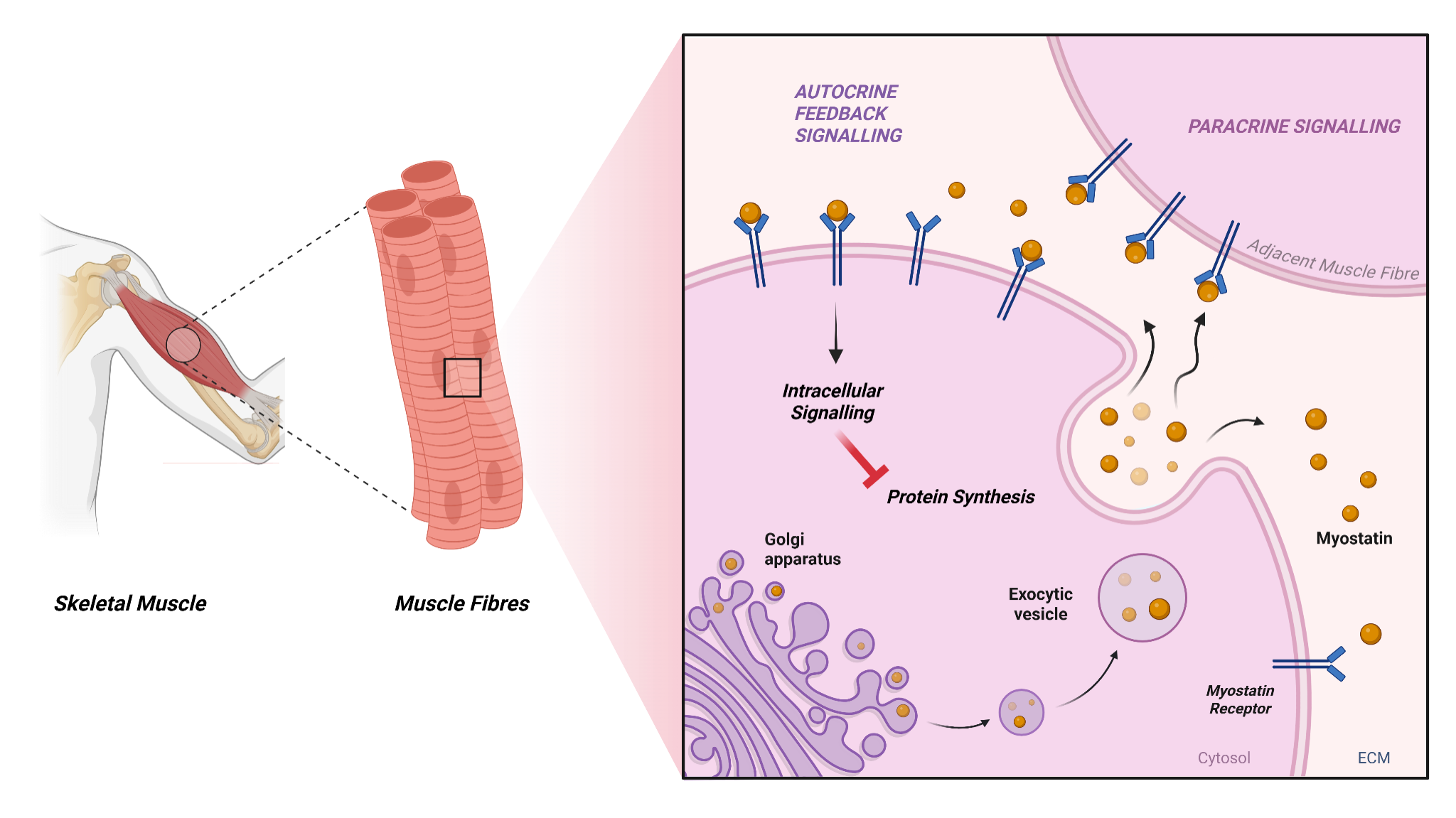
Myostatin is a hormone released by muscle that acts like a brake on muscle growth. When myostatin activity rises, muscle-building signals are held back [2].
The discussion starts with a mouse study. This matters because it was a preclinical study [3], meaning it was done in animals rather than humans. Animal findings can be interesting, but they do not automatically tell us what will happen in people.
In the study, mice were not genetically engineered to lose vitamin D signaling in fat cells or muscle cells. Instead, they were fed either no vitamin D, a normal amount, or a very high amount.
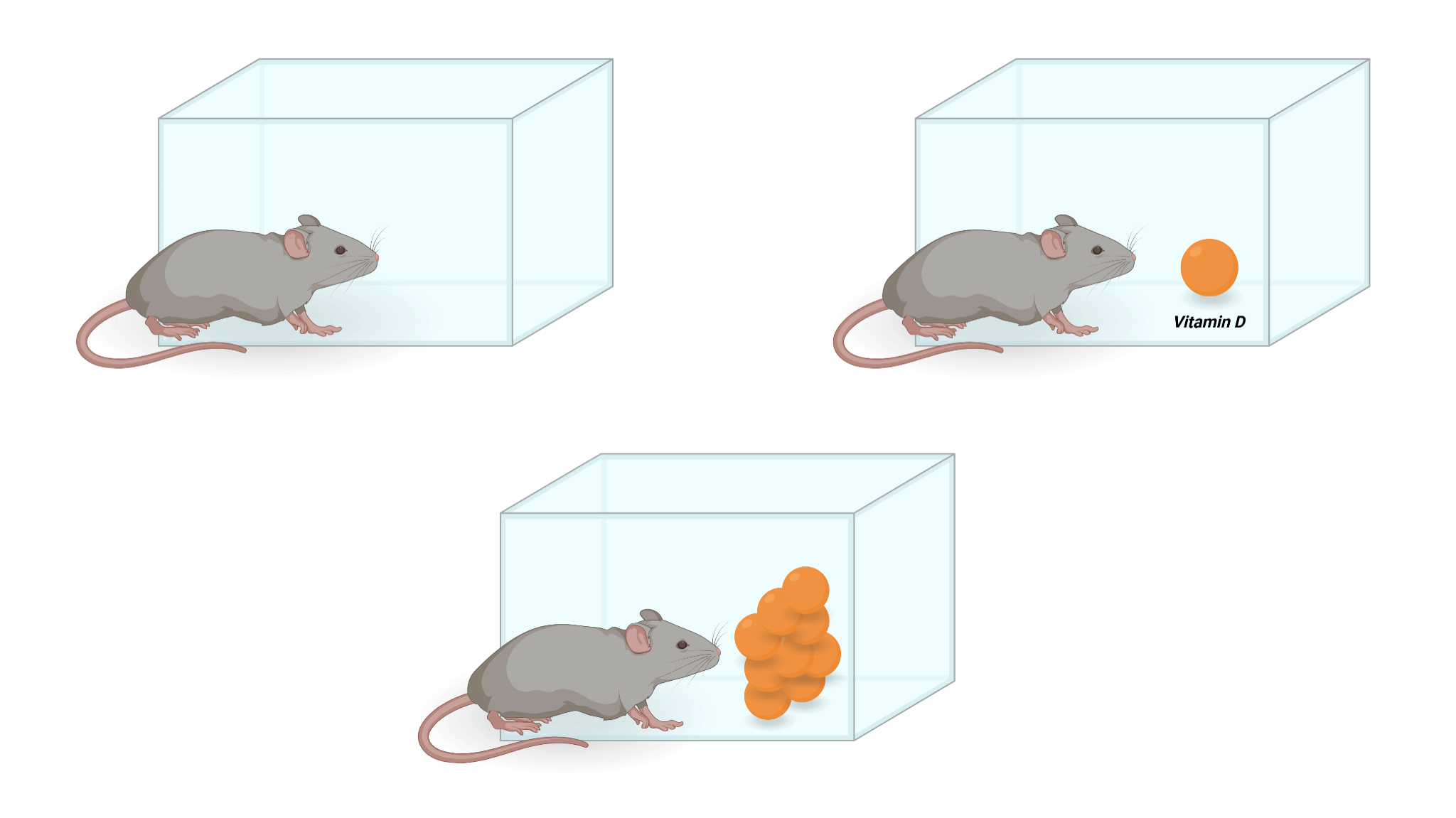
That is an important distinction, because it affects how strong the conclusions can be. The findings did show that when mice were given no vitamin D, leptin levels dropped and myostatin levels increased.
At first glance, that sounds like a major metabolic and muscle-related effect. Lower leptin could suggest weaker energy signaling, and higher myostatin could suggest less muscle growth. But the rest of the data does not support those implications very well.
The researchers did not report food intake for the no-vitamin-D group, which leaves a major gap. If the argument is that the body could no longer sense energy stores properly, then food intake becomes a key piece of evidence. Without it, the conclusion is much weaker. On top of that, body weight in the mice without vitamin D was the same as in the mice that did consume vitamin D, which makes the idea of major disruption in energy sensing harder to support.
The same problem shows up with myostatin. Yes, mice without vitamin D had more of this muscle-inhibiting hormone, but when lean mass was measured, there was no difference between normal vitamin D intake and no vitamin D intake. Lean mass is an imperfect stand-in for muscle because it includes more than muscle alone, but even with that limitation, there was still no visible loss.
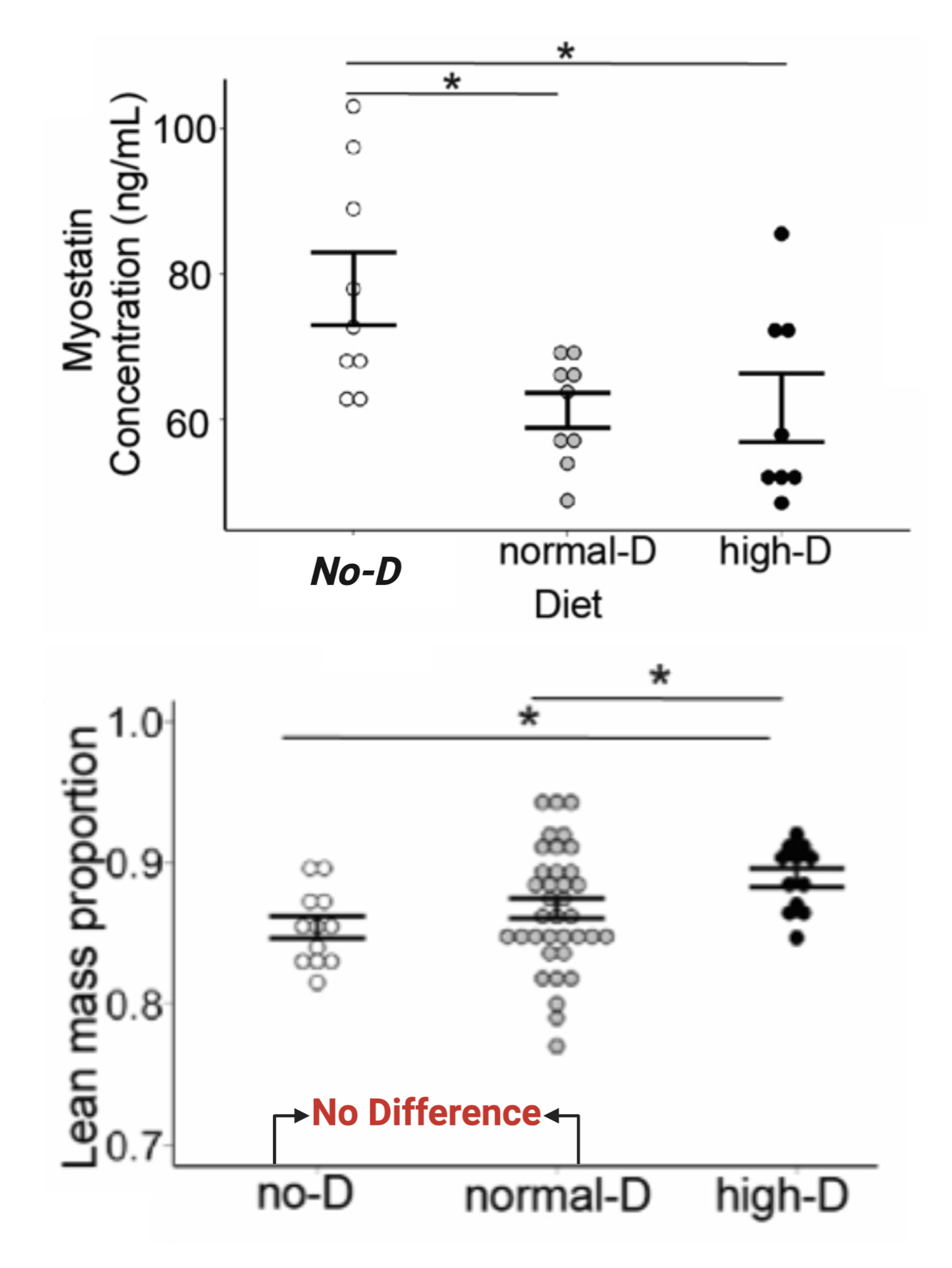
So the most careful interpretation is this: to set us up for future looks at vitamin D - is that consuming no vitamin D leads to a drop in leptin and an increase in myostatin, which would suggest a change in food intake and a reduction in muscle mass. However, upon further inspection, those suggestions appear not to be accurate, so all we truly have is a change in hormonal profile - so far.
Claim 2: Vitamin D increases muscle mass and redirects how the body uses calories
The next step shifts from removing vitamin D to raising it. Here, the claim is that increasing vitamin D improves muscle-related outcomes by redirecting nutrients toward muscle instead of fat.
Mr. DeLauer’s claim is more convincing than the first. Mice given very high vitamin D had more lean mass than mice given a normal amount. That does not automatically mean they had more muscle, because lean mass includes water, bone, cartilage, and other non-fat tissues.

Still, the story becomes more interesting because muscle function also improved. Grip strength went up noticeably in the high-vitamin-D group.
Taken together, more lean mass, better physical performance, and lower fat mass make it reasonable to say that high vitamin D improved body composition and function in this animal model. That is a fair reading of the study itself.
What is not fair is jumping straight from that animal result to the conclusion that the same thing will happen in humans. At this point, the evidence only supports the claim inside the boundaries of this mouse study.
The Metabolism Claim and the Problems With the Study
The next claim is that the mice did not move more, did not eat more, and yet still burned more energy when given high-dose vitamin D. The study does suggest that metabolism went up independently of physical activity.
That sounds impressive, but this is also where the study’s weaknesses become harder to ignore. Physical activity was said to be measured, but the actual activity data were not shown. That means part of the conclusion depends on trust rather than transparent evidence.
More broadly, the study mixes together direct findings, correlations, assumptions, and missing data. Some of the claims rely on actual intervention results, while others rely on interpretation layered on top of incomplete information. When all of that gets bundled together, the conclusions start to look stronger than the evidence really allows.
This preclinical study clearly indicates that normalizing vitamin D intake can raise leptin and reduce myostatin. It also indicates that physical function improves, and even more so at higher doses of vitamin D, including increases in lean mass at higher doses of vitamin D. And, finally, it tells us that very high vitamin D intake raises metabolism, independent of increased physical activity.
But this study had not passed peer review at the time discussed. A preprint is a study shared before formal review by outside experts. That does not automatically make it wrong, but it does mean it has not yet gone through an important quality check. Given the missing information and speculative leaps, that matters a great deal here.
Vitamin D Clinical Trials on Muscle
Vitamin D Supplementation on Myostatin in Humans
Vitamin D during Development
More on Vitamin D in Human Muscle Cells
All of these topics are explored in depth in the complete analysis, along with access to a private podcast, live sessions, a growing research library, and practical breakdowns—available exclusively to Physionic Insiders.
Claim 3: People with more Vitamin D-related genetics grow more and have an advantage
After the animal data, the discussion moves to a human genetics argument. The idea is that people with gene variants linked to higher lifelong vitamin D levels tend to grow taller, which is then used to support the idea that vitamin D pushes energy toward growth and lean tissue.
This comes from a Mendelian randomization approach. That is a type of genetic analysis that uses naturally occurring gene differences to study whether a long-term biological exposure may be linked to a certain outcome. In this case, the exposure is higher vitamin D across life, and the outcome is greater height.
There is some truth here. The data do show a relationship between genetically higher vitamin D and being taller. It is also correct to point out that this does not mean taking vitamin D supplements as an adult will suddenly make someone taller.
The problem is that this evidence is being stretched too far. Height growth happens mainly during childhood and adolescence, while the mouse data being discussed are about adult animals and outcomes like muscle function and lean mass. Those are different species, different stages of life, and different outcomes. So while the human genetic data may hint that vitamin D is related to growth in some context, it does not strongly support the idea that high-dose vitamin D will improve muscle growth or metabolism in adults.
That makes this part of the argument interesting, but not especially compelling for the question at hand.
Why the Later Mechanistic Evidence Still Has Limits
The next part is that Mr. DeLauer goes into a cell study using human muscle cells and another animal study. On their own, those kinds of studies can help explain mechanisms, meaning the biological steps that might lead to an effect. But they still do not solve the bigger question of whether high-dose vitamin D reliably improves muscle and metabolism in humans.
Where Vitamin D Deficiency Matters Most
The biggest benefit from vitamin D is likely to come when someone is deficient. That is a very different claim from saying that high-dose vitamin D will broadly build muscle or rev up metabolism in anyone who takes it.
The problem comes when the earlier animal and mechanistic findings are presented as though they can be applied directly to humans in general. That leap is not justified by the evidence discussed. The same issue appears when other nutrients, like magnesium and glycine, are brought into the explanation without supportive evidence from the studies being covered. At that point, the discussion shifts from evidence-based interpretation into speculation.
So the practical takeaway is not that everyone should pursue high-dose vitamin D for muscle growth or fat loss. The more defensible point is that correcting a deficiency may matter, while broader performance and body composition claims remain unproven.
Main Points
Claim: Vitamin D supplementation changes two key hormones related to muscle and metabolism.
Conclusion: Vitamin D did change leptin and myostatin in mice, but those shifts did not clearly lead to meaningful changes in body weight, food intake, or lean mass.
Claim: Vitamin D increases muscle mass and redirects how the body uses calories.
Conclusion: In mice, very high vitamin D was linked to more lean mass, better grip strength, less fat, and higher metabolism. But that still does not prove the same effect in humans.
Claim: People with more vitamin-D-related genetics grow more and have an advantage.
Conclusion: Higher lifelong vitamin D genetics were linked to greater height, but that is not the same as improved muscle growth or metabolism in adults.
Claim: High-dose vitamin D is a proven strategy for muscle growth and metabolic improvement in humans.
Conclusion: The evidence does not convincingly prove that.
Vitamin D Clinical Trials on Muscle
Vitamin D Supplementation on Myostatin in Humans
Vitamin D during Development
More on Vitamin D in Human Muscle Cells
All of these topics are explored in depth in the complete analysis, along with access to a private podcast, live sessions, a growing research library, and practical breakdowns—available exclusively to Physionic Insiders.
Dr. Nicolas Verhoeven, PhD / Physionic
References
[1] Flier JS, Ahima RS. Leptin physiology and pathophysiology: knowns and unknowns 30 years after its discovery. J Clin Invest. 2024;134(1):e174595. doi:10.1172/JCI174595.
[2] Baig MH, Ahmad K, Moon JS, et al. Myostatin and its Regulation: A Comprehensive Review of Myostatin Inhibiting Strategies. Front Physiol. 2022;13:876078. Published 2022 Jun 23. doi:10.3389/fphys.2022.876078
[3] Roizen J, Long C, Casella A, Nguyen M, Danahy L, Seiler C, Lei M, Mark J. High dose dietary vitamin D allocates surplus calories to muscle and growth instead of fat via modulation of myostatin and leptin signaling. Research Square [preprint]. Published May 8, 2024. doi:10.21203/rs.3.rs-4202165/v1
[4] Romeu Montenegro K, Maron Carlessi R, Fernandes Cruzat V, Newsholme P. Effects of vitamin D on primary human skeletal muscle cell proliferation, differentiation, protein synthesis and bioenergetics. J Steroid Biochem Mol Biol. 2019;195:105423. doi:10.1016/j.jsbmb.2019.105423.
[5] Bass JJ, Nakhuda A, Deane CS, Brook MS, Wilkinson DJ, Phillips BE, Philp A, Tarum J, Kadi F, Andersen D, Muñoz Garcia A, Smith K, Gallagher IJ, Szewczyk NJ, Cleasby ME, Atherton PJ. Overexpression of the vitamin D receptor (VDR) induces skeletal muscle hypertrophy. Mol Metab. 2020;42:101059. doi:10.1016/j.molmet.2020.101059.
[6] Agergaard J, Trøstrup J, Uth J, et al. Does vitamin-D intake during resistance training improve the skeletal muscle hypertrophic and strength response in young and elderly men? A randomized controlled trial. Nutr Metab (Lond). 2015;12:32. doi:10.1186/s12986-015-0029-y
[7] Ceglia L, Niramitmahapanya S, da Silva Morais M, et al. A randomized study on the effect of vitamin D₃ supplementation on skeletal muscle morphology and vitamin D receptor concentration in older women. J Clin Endocrinol Metab. 2013;98(12):E1927-E1935. doi:10.1210/jc.2013-2820