
Powerful Eye Nutrient Now Shown to Also Protect Against Cancer

Main Points
Zeaxanthin began as a proven eye-health nutrient in randomized macular-degeneration trials, but higher-quality observational studies now also show that people who consume the most zeaxanthin, especially women with a family history of breast cancer, have substantially lower breast-cancer risk, and newer mechanistic work in mice demonstrates that zeaxanthin slows tumor growth.In practical terms, that intake level can be reached with food by eating about 10 grams of dried wolfberries (goji berries) per day, which are exceptionally rich in zeaxanthin and relatively low in calories, though people on blood-pressure medications, blood thinners, or similar drugs should check with their doctor before making goji a daily habit; overall, the combined human and mechanistic evidence supports treating zeaxanthin as a legitimate cancer-fighting nutrient, even though the cancer data are not yet as definitive as the eye-health trials.
A year or two ago, I went through several randomized trials showing that one particular nutrient really can slow vision loss in people with macular degeneration. That nutrient is zeaxanthin. Those eye studies were strong enough that zeaxanthin graduated from “interesting supplement” to something with clear, real-world impact for vision.
Since then, a new line of research has appeared suggesting something bigger: zeaxanthin may not just protect your eyes—it may also protect against cancer. That immediately raises three questions: how strong is the cancer evidence, how does it compare to the eye-health data, and is there a way to get enough zeaxanthin from food that supplementation becomes optional?
Higher Zeaxanthin, Lower Cancer Risk
When you look across the broader literature [617-620], a consistent pattern emerges. People who eat more zeaxanthin or have higher zeaxanthin levels in their blood tend to have a lower risk of certain cancers. The clearest signals so far come from studies on breast cancer [618,620] and bladder cancer [619]. In those, higher zeaxanthin intake or blood levels are linked with reduced cancer risk.
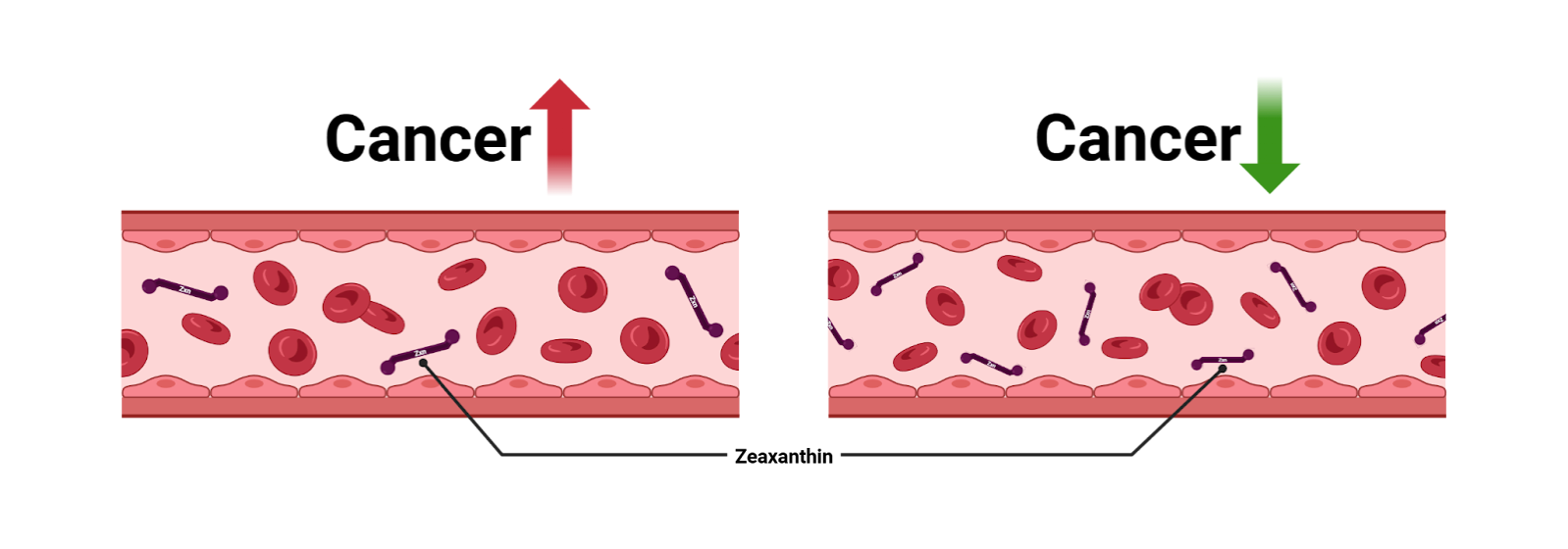
There are also studies that don’t find a clear effect. But when you compare them, the “no effect” studies are generally smaller and less carefully controlled. They often don’t fully adjust for major cancer risk factors like age, smoking, hormone use, body weight, or family history. Because of that, their conclusions carry less weight.
A particularly important piece of evidence comes from a large, long-term study [618] in women that followed zeaxanthin intake over 14 years. Women who were in the highest intake group had a meaningful reduction in overall breast cancer risk compared with those in the lowest intake group. What makes that study stand out is how thoroughly it controlled for known breast-cancer risk factors-things like age, reproductive history, family history of breast cancer, menopausal status, hormone replacement therapy, and total calorie intake.
Other, smaller studies [619,620] , even those that broadly agree with this trend, often have weaker methods, less follow-up time, or fewer controls for confounding factors. But when you put the higher-quality evidence together, the direction is remarkably consistent: higher zeaxanthin intake is associated with lower cancer risk, with breast cancer showing the strongest signal so far and bladder cancer having more tentative but still suggestive support.
Zeaxanthin Slows Tumor Growth in Mice
Human observational studies tell us “what tends to happen,” but not exactly how it happens. To answer that, we need mechanistic work [617] and that’s where a newer study comes in.
Researchers noticed that zeaxanthin levels rise in settings where cancer cells are being killed. That made it an obvious candidate to test more directly. So they turned to mouse models. Mice were given one of two different cancers and allowed to develop tumors. After the tumors had formed, the animals were split into groups: one group received zeaxanthin, the other did not.
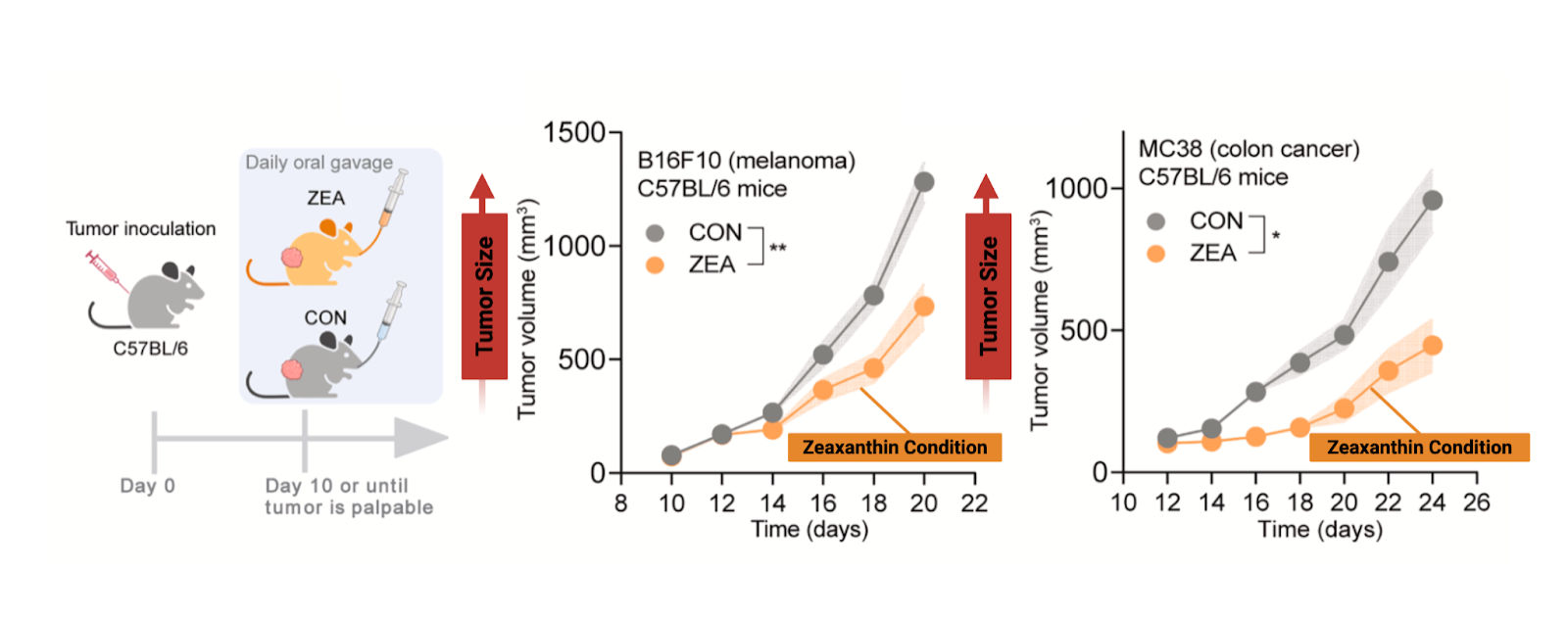
Over time, the researchers measured tumor size. In both cancer types, the mice that received zeaxanthin had slower tumor growth than the controls. The tumor growth curves in the zeaxanthin groups sat clearly below the curves in the untreated groups, meaning the cancers progressed more slowly when zeaxanthin was present, regardless of which of the two tumor types the mice carried.
How Zeaxanthin Supercharges T Cells
The next question is how zeaxanthin actually produces that effect. The answer points straight at the immune system, and specifically at T cells - the immune cells that recognize and attack infected or abnormal cells, including cancer cells.
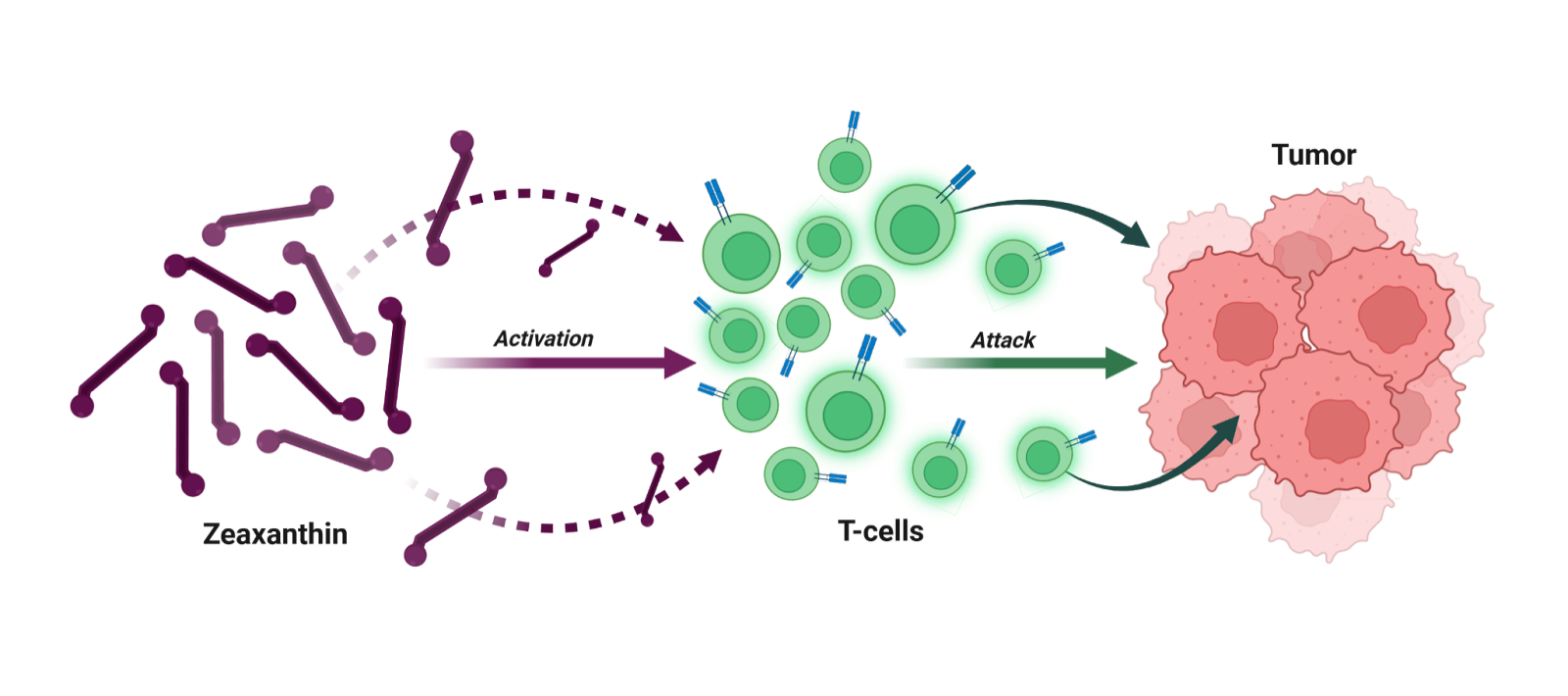
In the mechanistic work, zeaxanthin didn’t behave like a direct toxin for tumor cells. Instead, it boosted T-cell activity. Zeaxanthin-exposed T cells were better at multiplying, releasing signaling molecules, and secreting toxic proteins like perforin and granzymes-the substances T cells use to punch holes in target cells and trigger them to self-destruct.
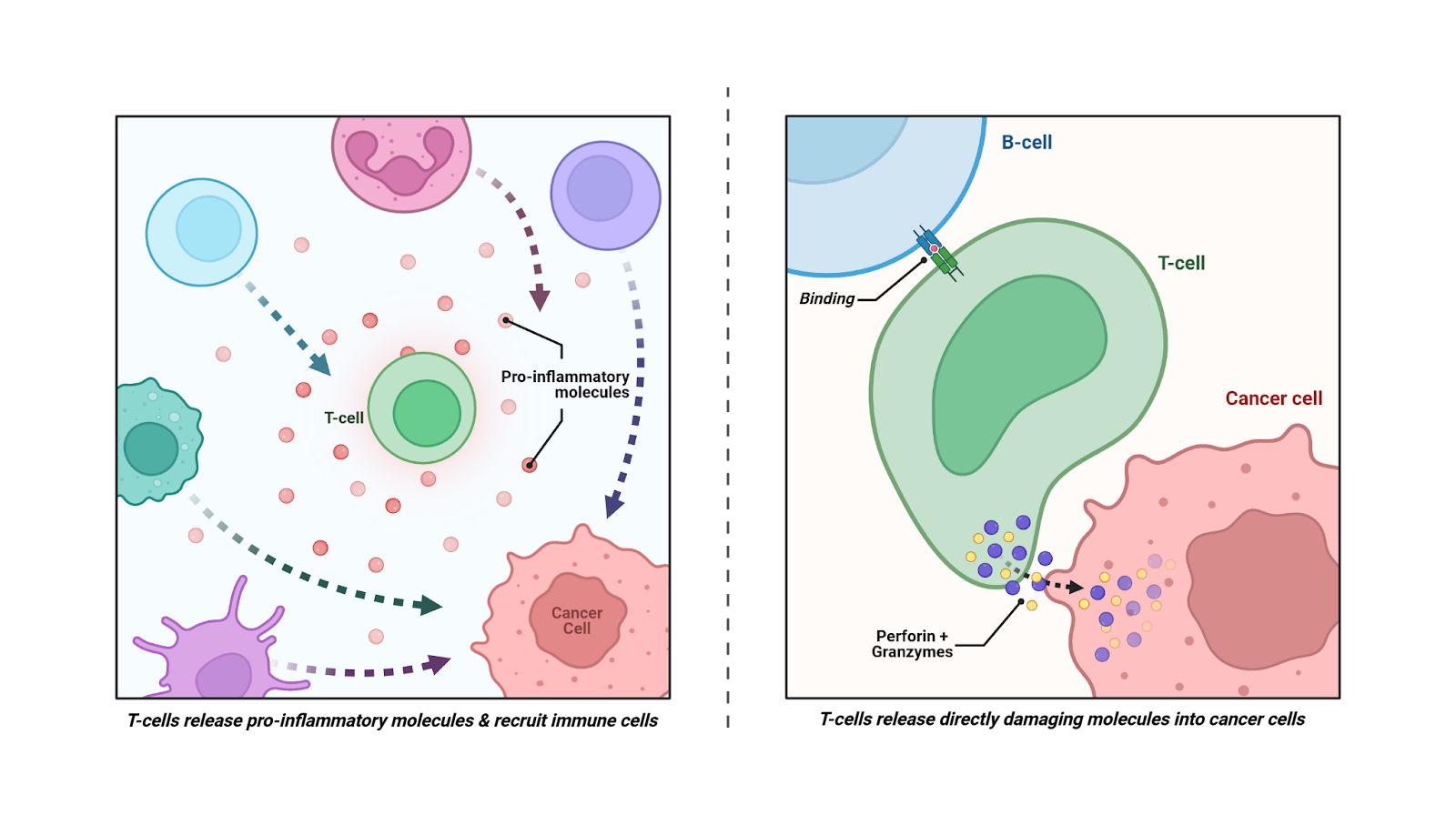
Put together, the picture is that zeaxanthin doesn’t just “help the immune system” in a vague way. It stabilizes and strengthens the T-cell receptor machinery, so T cells can more effectively detect and kill cancer cells.
Zeaxanthin Plus Immunotherapy: Stronger Together
The researchers also explored how zeaxanthin behaves alongside immunotherapy, a class of cancer treatments designed to help the immune system, especially T cells, attack tumors more effectively.
They compared four groups with tumors: no treatment, zeaxanthin alone, immunotherapy alone, and zeaxanthin combined with immunotherapy. As you’d expect, treatment with zeaxanthin by itself slowed tumor growth compared with no treatment, and immunotherapy alone also shrank tumors. But the combination of zeaxanthin plus immunotherapy produced the largest reduction in tumor size-more than either treatment could achieve on its own.
Breast Cancer and Zeaxanthin: Menopausal Status and More
Zeaxanthin’s Cell Membrane Mechanism
Zeaxanthin Dosing and Reputable Sources
All of these topics are explored in depth in the complete analysis, along with access to a private podcast, live sessions, a growing research library, and practical breakdowns—available exclusively to Physionic Insiders:
How Strong Is Cancer Evidence Compared with Eye Health?
With eye health, the evidence for zeaxanthin is based on direct human intervention trials. People with macular degeneration were given zeaxanthin and then followed over time, and those trials showed clear visual benefits. That’s as clean as it gets in nutrition science.
For cancer, we’re working with a different mix of evidence. On one side, we have mechanistic and animal studies showing that zeaxanthin can slow tumor growth and enhance T-cell function, both alone and in combination with immunotherapy. On the other side, we have long-term observational studies in humans, where zeaxanthin intake or blood levels are tracked over years and then related to cancer outcomes, especially breast and bladder cancer.
That means the cancer evidence is not yet as strong or direct as the eye-health data. There isn’t a big, randomized trial where people are given zeaxanthin and followed specifically for cancer incidence. At the same time, when you zoom out beyond zeaxanthin and look at carotenoids as a whole-the family of plant pigments that includes zeaxanthin and lutein—the pattern is fairly consistent: higher carotenoid intake and blood levels are associated with lower cancer risk in many settings. Zeaxanthin fits snugly into that broader trend.
What About Lutein?
If you’ve ever seen an eye-health supplement, you’ve likely seen zeaxanthin paired with lutein. The two molecules are structurally similar, and they often show up together in foods and in the macula of the eye. In many eye-health studies, both are given together, which makes it hard to untangle their individual contributions.
In the cancer-focused mechanistic study described here, though, the emphasis was squarely on zeaxanthin.
Food First: Wolfberries (Goji Berries) as a Zeaxanthin Powerhouse
All of this naturally leads to a practical question: should you aim for zeaxanthin supplements, or can you get enough from food?
There is one food that stands out as a zeaxanthin powerhouse: the wolfberry, more commonly known as the goji berry.
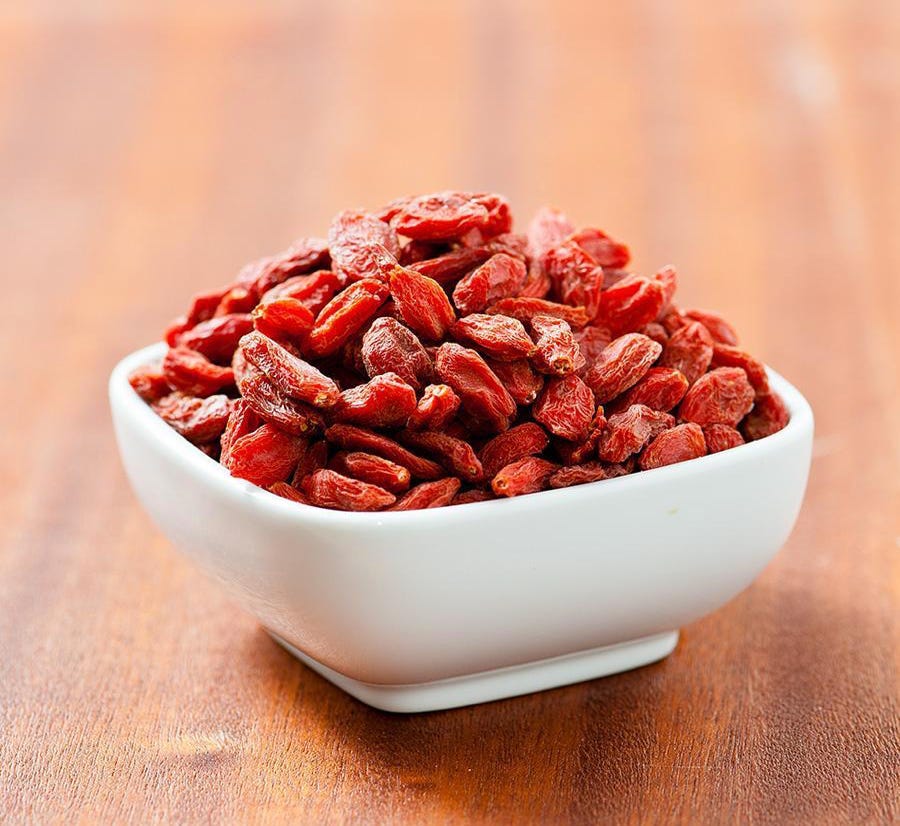
Goji berries are unusually rich in zeaxanthin. When you look at the available data and make rough comparisons, around 10 grams of dried goji berries per day-a very small handful-is enough to put you into the high zeaxanthin intake range seen in protective human studies. That’s a tiny amount of food for a very concentrated dose of this nutrient, and because dried wolfberries are relatively low in calories, you get a lot of zeaxanthin without taking on a big energy load.
There is one important caution with wolfberries. They are not completely neutral. They can interact with certain medications, particularly blood-pressure drugs, blood thinners, and other similar prescriptions. If you are taking these, it’s important to check with your physician before making goji berries a daily habit.
Main Points
Zeaxanthin began as a proven eye-health nutrient in randomized macular-degeneration trials, but higher-quality observational studies now also show that people who consume the most zeaxanthin, especially women with a family history of breast cancer, have substantially lower breast-cancer risk, and newer mechanistic work in mice demonstrates that zeaxanthin slows tumor growth.In practical terms, that intake level can be reached with food by eating about 10 grams of dried wolfberries (goji berries) per day, which are exceptionally rich in zeaxanthin and relatively low in calories, though people on blood-pressure medications, blood thinners, or similar drugs should check with their doctor before making goji a daily habit; overall, the combined human and mechanistic evidence supports treating zeaxanthin as a legitimate cancer-fighting nutrient, even though the cancer data are not yet as definitive as the eye-health trials.
Breast Cancer and Zeaxanthin: Menopausal Status and More
Zeaxanthin’s Cell Membrane Mechanism
Zeaxanthin Dosing and Reputable Sources
All of these topics are explored in depth in the complete analysis, along with access to a private podcast, live sessions, a growing research library, and practical breakdowns—available exclusively to Physionic Insiders:
Dr. Nicolas Verhoeven, PhD / Physionic
References
[Study 617] Zhang FQ, Li J, Zhang R, Tu J, Xie Z, Tsuji T, et al. Zeaxanthin augments CD8+ effector T cell function and immunotherapy efficacy. Cell Rep Med.
Funding/Conflicts: Public funding: This study was supported by U.S. public funding from the National Institutes of Health / National Cancer Institute via research grants CA140515, CA174786, and CA276568; Non-profit funding: Additional non-profit support came from the Ludwig Center at the University of Chicago and the Harborview Foundation Gift Fund; Industry funding: No direct industry funding for this specific study was reported, although some authors hold relationships with biotechnology companies as disclosed in the conflict of interest statement; Conflicts of interest: One author (Jing Chen) has patents pending related to zeaxanthin, and another author (Chuan He) is a scientific founder, advisory-board member, and equity holder in Aferna Bio and Ellis Bio, a cofounder and equity holder in Accent Therapeutics, and a scientific advisory-board member for Rona Therapeutics.
[Study 618] Zhang S, Hunter DJ, Forman MR, Rosner BA, Speizer FE, Colditz GA, et al. Dietary carotenoids and vitamins A, C, and E and risk of breast cancer. J Natl Cancer Inst. 1999;91(6):547-556. doi:10.1093/jnci/91.6.547.
Funding/Conflicts: Public funding: This study was supported by U.S. Public Health Service grant CA40356 from the National Cancer Institute, National Institutes of Health; Non-Profit funding: no specific non-profit organizations or foundation grants were identified in the available article metadata; Industry funding: no industry or commercial sponsors were identified in the available article metadata; Conflicts of interest: no author conflicts of interest or financial disclosures were reported in the abstract or funding records accessible for this 1999 article.
[Study 619] Hung RJ, Zhang ZF, Rao JY, Pantuck A, Reuter VE, Heber D, et al. Protective effects of plasma carotenoids on the risk of bladder cancer. J Urol. 2006;176(3):1192-1197. doi:10.1016/j.juro.2006.04.030.
Funding/Conflicts: Public funding: This study was supported by U.S. National Institutes of Health grants from the National Cancer Institute (CA09142, CA16042, CA42710, CA77954, CA96116) and the National Institute of Environmental Health Sciences (ES011667, ES06718); Non-Profit funding: no specific non-profit or charitable organizations were identified in the accessible funding information; Industry funding: no industry or commercial sponsors were identified in the accessible funding information; Conflicts of interest: no author conflicts of interest or financial disclosures were reported in the available records, and none are apparent without access to the journal’s full conflict-of-interest statement.
[Study 620] Eliassen AH, Hendrickson SJ, Brinton LA, Buring JE, Campos H, Dai Q, et al. Circulating carotenoids and risk of breast cancer: pooled analysis of eight prospective studies. J Natl Cancer Inst. 2012;104(24):1905-1916. doi:10.1093/jnci/djs461.
Funding/Conflicts: Public funding: This work was supported primarily by the US National Cancer Institute at the National Institutes of Health (R03 CA128073), with additional public funding from National Cancer Institute grants (R01 CA131218, P01 CA87969, R01 CA49449, R01 CA098661, P30 CA016087, P01 CA33619, R37 CA54281, CA-047988, R01 CA106591, R37 CA70867), the National Institute of Environmental Health Sciences Center (ES000260), the National Heart Lung and Blood Institute (HL043851, HL080467, HL099355), National Institutes of Health contracts (N01 PC35137, N01 PC35139, N02 CP1101066), the Intramural Research Program of the National Institutes of Health, the Swedish Scientific Council, the Swedish Research Council, the Regional Government of Västerbotten, Sweden, and an NIH training grant (5 T32 CA09001-35); Non-Profit funding: Non-profit support came from the Swedish Cancer Society; Industry funding: Industry support consisted of a grant from DSM Nutritional Products, Inc. (formerly Roche Vitamins); Conflicts of interest: No specific author conflicts of interest or financial disclosures were described in the article, and the authors state that the study sponsors had no role in the study design, data collection, analysis, interpretation, manuscript preparation, or decision to submit for publication.
[Study 621] Bakker MF, Peeters PH, Klaasen VM, et al. Plasma carotenoids, vitamin C, tocopherols, and retinol and the risk of breast cancer in the European Prospective Investigation into Cancer and Nutrition cohort. Am J Clin Nutr. 2016;103(2):454-464. doi:10.3945/ajcn.114.101659
Funding/Conflicts: Public funding: This EPIC breast cancer study received public research support from the UK Medical Research Council (several grants) and the World Health Organization as listed in the grants and funding section; Non-Profit funding: Additional non-profit support came from Cancer Research UK (multiple grants) and the Wellcome Trust; Industry funding: No industry or commercial sponsors are identified in the available funding records; Conflicts of interest: No author conflicts of interest or financial disclosures are reported in the abstract or accessible metadata, and any detailed disclosures would only appear in the journal’s full text, which is not accessible here.