
Sarcosine: Regenerate Aging Muscle - by Molecularly Starving It

Main Points
Early evidence links low sarcosine with sarcopenia and shows that raising sarcosine in aged mice improves muscle mass, speeds regeneration, and increases strength, likely by re-programming macrophages into a less inflammatory, more repair-supportive mode. However, human trials for muscle outcomes are lacking, so any supplementation is speculative; for now, prioritize training and adequate protein, consider ensuring precursors (protein/choline) are sufficient, and watch for clinical data as this promising but early field matures
Another molecule that has far better evidence combating sarcopenia
The impact of sarcosine on fat cell metabolism
Deeper mechanisms of how sarcosine functions in your cells
All of that is included in the complete analysis, along with access to a private podcast, live sessions with me, a library of articles and videos, and much more as a Physionic Insider :
Sarcopenia—the age-related loss of muscle size, strength, and power—raises the risk of frailty, falls, and loss of independence. An emerging line of research [515] points to an unusual helper: sarcosine, a naturally occurring amino-acid derivative that appears to “nutrient-stress” specific immune cells in a way that reduces tissue inflammation and speeds muscle repair. Here’s what the latest study suggests—and how to think about it practically.
What Is Sarcosine—and Why It Matters
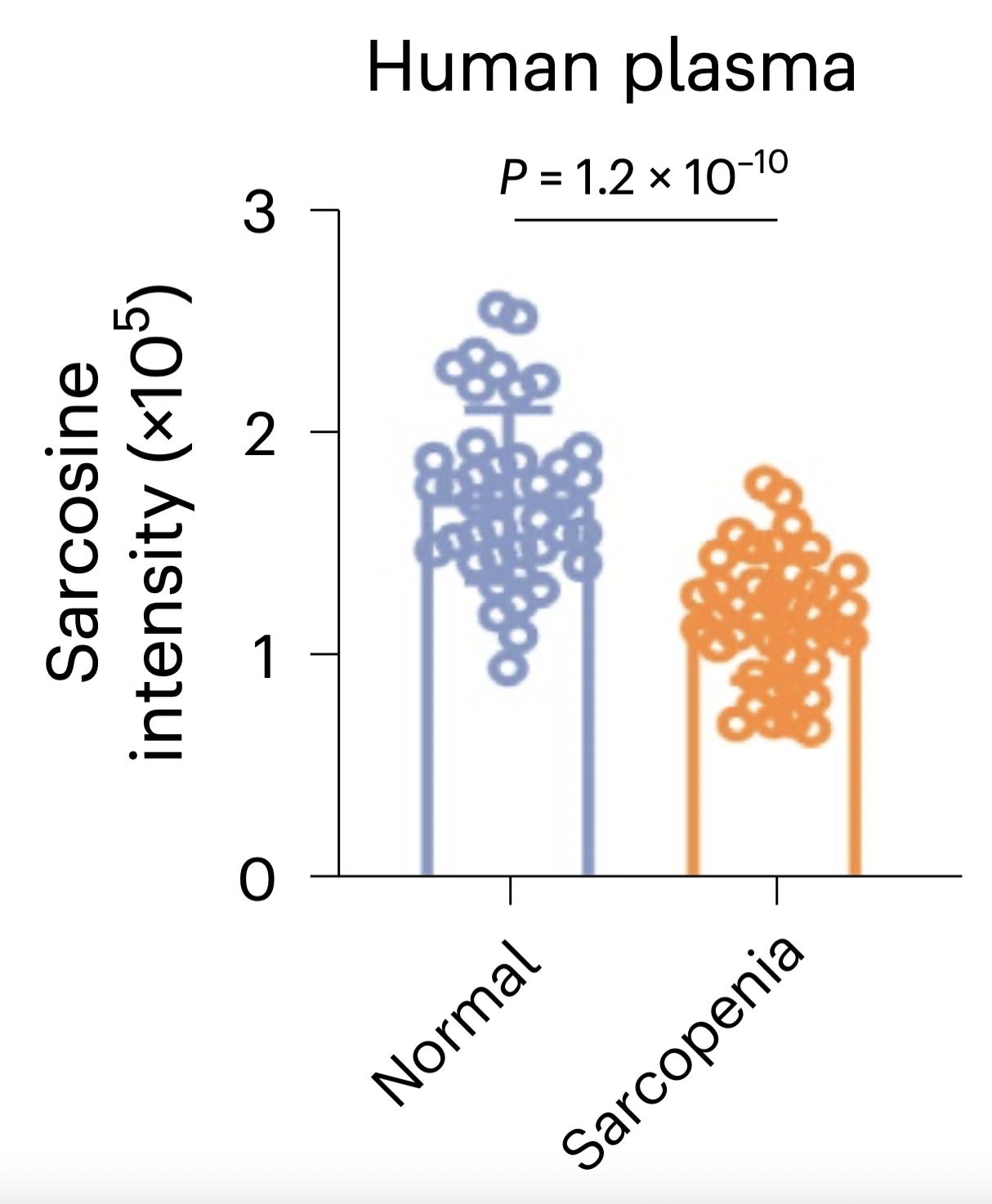
Observational data in the study show that people with sarcopenia tend to have lower sarcosine levels. In aged mice, raising sarcosine led to gains in muscle mass, implicating sarcosine deficiency as a contributor—not just a bystander—to severe age-related muscle loss.
How Sarcosine Seems to Work (Big Picture)
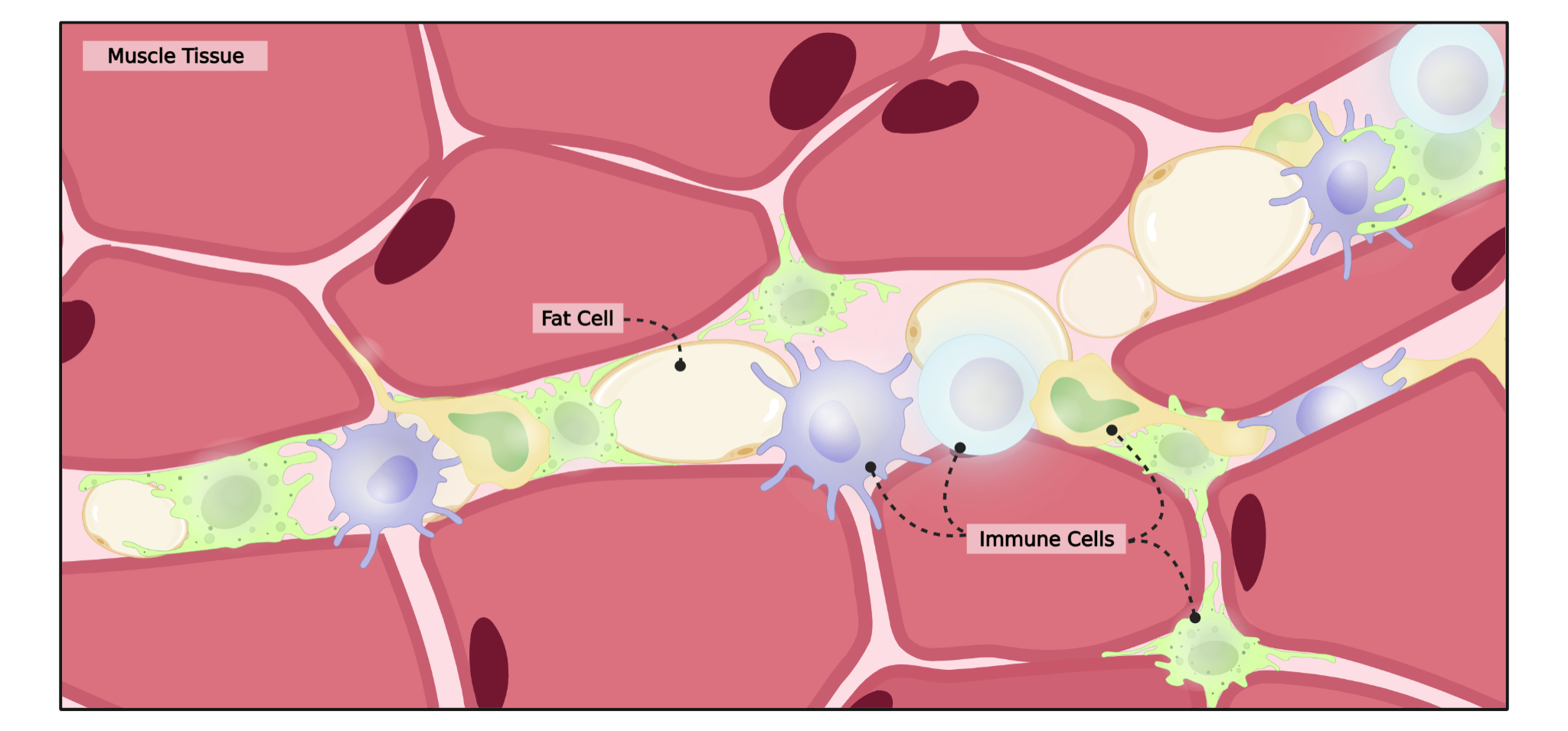
Rather than acting directly on muscle fibers, sarcosine appears to act through the immune system, especially macrophages that reside in and traffic through muscle and fat tissues. When sarcosine enters these cells, it triggers a nutrient-sensing response that shifts them toward an anti-inflammatory state. In the study, this immune shift coincided with more macrophage infiltration but less inflammatory tone within tissues—an environment that’s friendlier to muscle maintenance and repair. (Mechanistic fine points were beyond the scope of the public summary, but the pattern was consistent across experiments.)
Muscle Regeneration and Function
In an injury-repair model, animals given sarcosine showed less muscle cell death, faster regeneration, and higher contractile force versus controls—signals that the local immune re-programming translated into functional muscle benefits. While an injury model isn’t identical to gradual age-related wasting (I would like to see a different model used), the regeneration data reinforce sarcosine’s potential to accelerate recovery when muscle is under stress.
Another molecule that has far better evidence combating sarcopenia
The impact of sarcosine on fat cell metabolism
Deeper mechanisms of how sarcosine functions in your cells
All of that is included in the complete analysis, along with access to a private podcast, live sessions with me, a library of articles and videos, and much more as a Physionic Insider:
What This Does—and Doesn’t—Mean for You
Human evidence is limited. There are no randomized clinical trials testing sarcosine for muscle outcomes. Some human trials have used sarcosine for other conditions, but that doesn’t answer whether supplementation helps sarcopenia.
Your body makes sarcosine. It’s synthesized from common nutrients (e.g., glycine, methionine; choline contributes via related pathways). The study discusses the possibility—still unproven—that ensuring adequate protein and choline could help maintain sarcosine status.
Supplements exist, but… Because clinical muscle data in humans are missing, any sarcosine supplement use would be exploratory and should be discussed with a clinician, especially if you take medications or have kidney/liver conditions.
Don’t neglect the basics. Resistance training, sufficient dietary protein remain the first-line foundation against sarcopenia.
Main Points
Early evidence links low sarcosine with sarcopenia and shows that raising sarcosine in aged mice improves muscle mass, speeds regeneration, and increases strength, likely by re-programming macrophages into a less inflammatory, more repair-supportive mode. However, human trials for muscle outcomes are lacking, so any supplementation is speculative; for now, prioritize training and adequate protein, consider ensuring precursors (protein/choline) are sufficient, and watch for clinical data as this promising but early field matures
Another molecule that has far better evidence combating sarcopenia
The impact of sarcosine on fat cell metabolism
Deeper mechanisms of how sarcosine functions in your cells
All of that is included in the complete analysis, along with access to a private podcast, live sessions with me, a library of articles and videos, and much more as a Physionic Insider :
Dr. Nicolas Verhoeven, PhD / Physionic
References
[Study 515] Liu Y, Ge M, Xiao X, et al. Sarcosine decreases in sarcopenia and enhances muscle regeneration and adipose thermogenesis by activating anti-inflammatory macrophages. Nat Aging. 2025
Funding/Conflicts: Mixed Funding [Public funding: National Key R&D Program of China (2022YFA1303200, 2018YFC2000305, 2020YFC2005600); Noncommunicable Chronic Diseases–National Science and Technology Major Project (2024ZD0531100); National Natural Science Foundation of China (82073221, 82401845, 32301238, 31870826); Science and Technology Project of Sichuan Province (2024YFFK0099, 2021YFS0134, 2024NSFSC1601, 2023NSFSC1525, 2021YFS0136, 2023ZYD0173); Sichuan-Chongqing Science and Technology Innovation Cooperation Plan (2024YFHZ0072) / Non-profit/institutional funding: National Clinical Research Center for Geriatrics of West China Hospital at Sichuan University (Z2024JC002); West China Hospital postdoctoral fund (2023HXBH065); West China Hospital 1.3.5 project for disciplines of excellence (ZYYC23013)] // No direct Conflicts of Interest