
Strengthen your Gut Barrier Integrity using THIS!

Main Points
Resistant starch may help strengthen the gut barrier by increasing tight junction proteins such as ZO-1 and occludin. These proteins help neighboring gut cells stay closely connected, reducing intestinal permeability.
When gut permeability is reduced, fewer unwanted molecules, such as LPS, may enter the blood. This could lower the inflammatory burden coming from the gut.
The strongest mechanistic evidence comes largely from mouse research, so it should be interpreted cautiously. Human studies suggest resistant starch can reduce blood LPS, but the broader human evidence is still limited and varies in strength.
The most convincing studies used 40 grams of resistant starch per day. Lower amounts may still help, but the evidence for smaller doses is weaker.
Resistant starch has already been linked to several areas of metabolic health, including visceral fat, liver fat, and the gut microbiome. Another possible benefit is less commonly discussed, but may be highly relevant: gut barrier integrity.
The gut barrier is a single layer of epithelial cells that separates the contents of the intestines, including food particles and microbes, from the bloodstream.
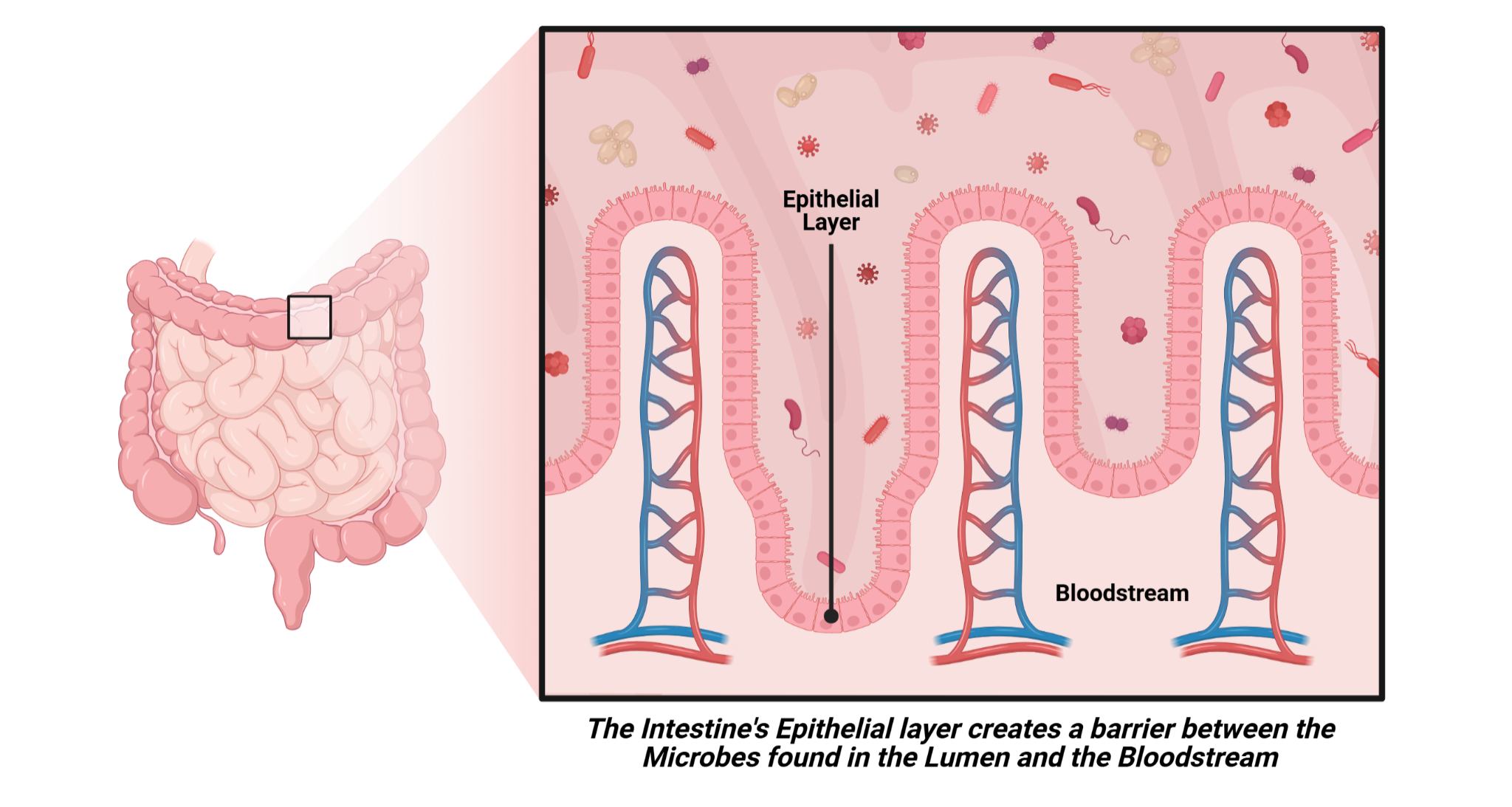
When this barrier weakens, epithelial cells may die, or the spaces between neighboring cells may widen. This can allow unwanted molecules to pass into the blood.
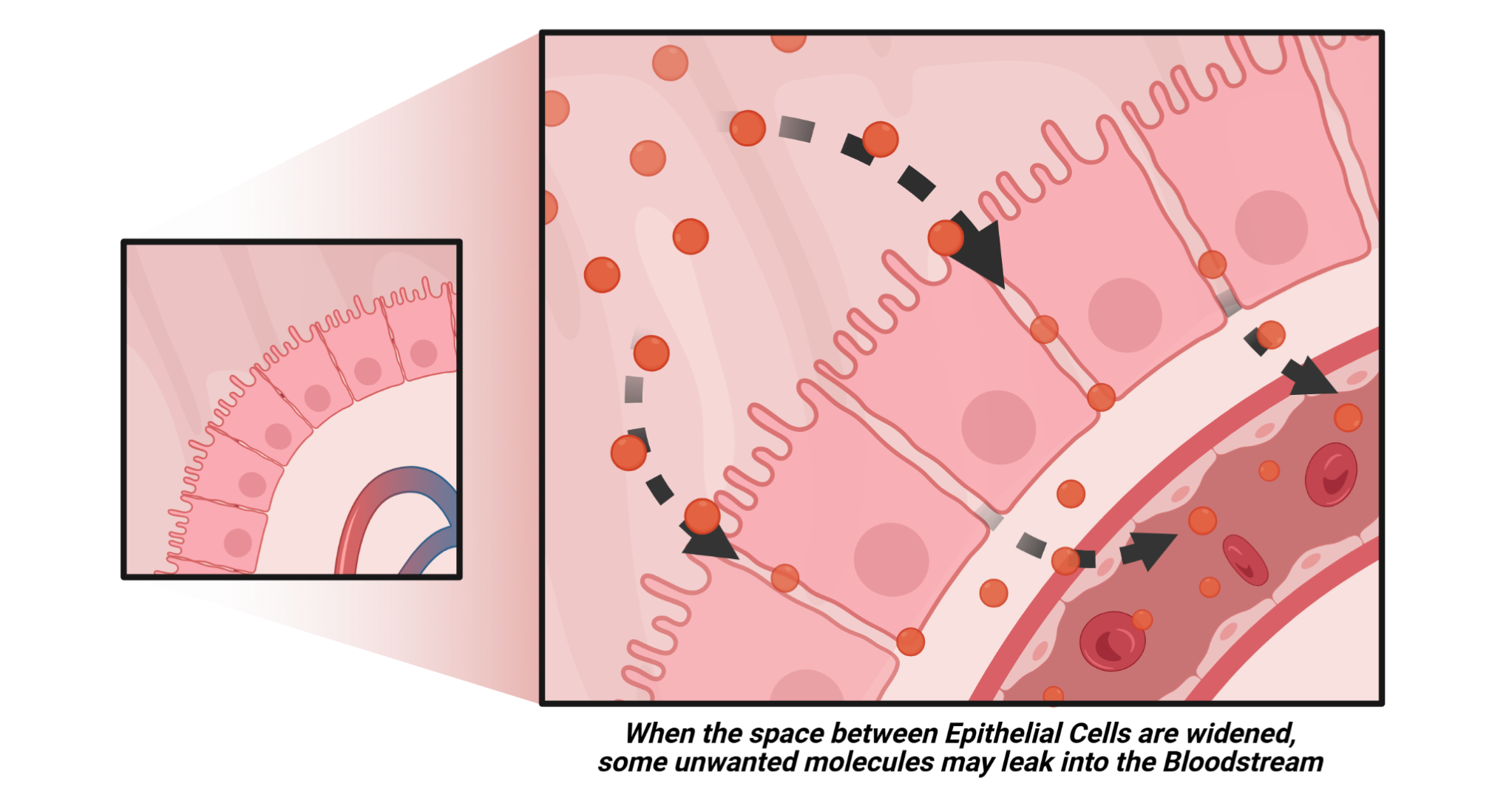
One example is lipopolysaccharide, or LPS, a molecule released by bacteria in the gut. When LPS enters the bloodstream, the body can respond by activating immune cells and increasing inflammation, as a whole.
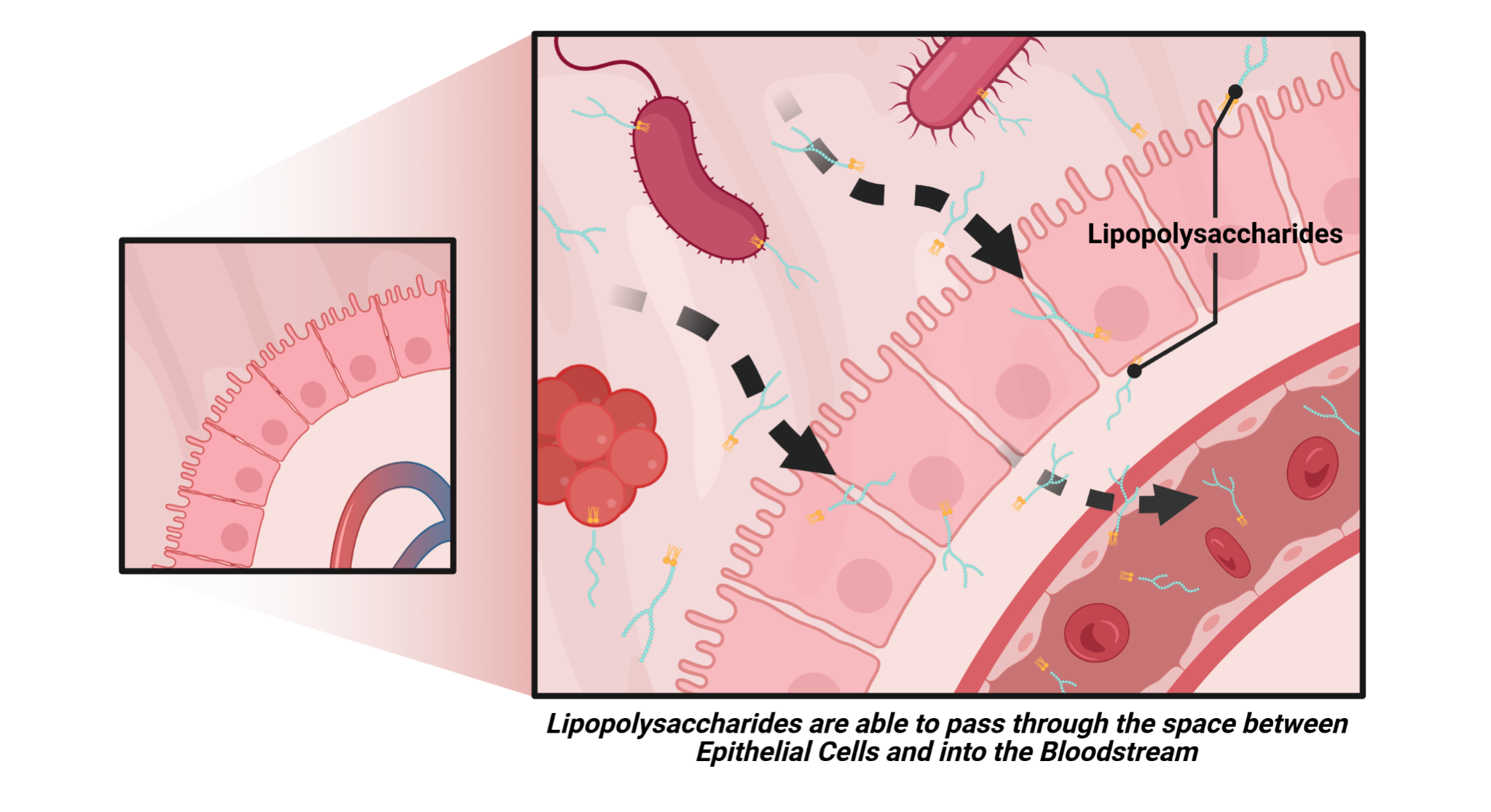
This process is often referred to casually as “leaky gut.” It is not a clinically recognized diagnosis, partly because it is difficult to measure. However, scientific literature suggests that impaired gut barrier integrity can occur and is often linked with conditions such as inflammatory bowel disease, celiac disease, and metabolic syndrome.
Resistant starch may matter here because it resists digestion and absorption in the intestines. In that sense, it behaves similarly to dietary fiber.
How Resistant Starch May Strengthen the Gut Barrier
In one influential study [608], microscope images of the intestinal lining showed the villi, which are small structures made from epithelial cells. The images highlighted tight junction-related proteins called ZO-1 and occludin (tight junction proteins). Greater amounts of these proteins suggest a more intact barrier.
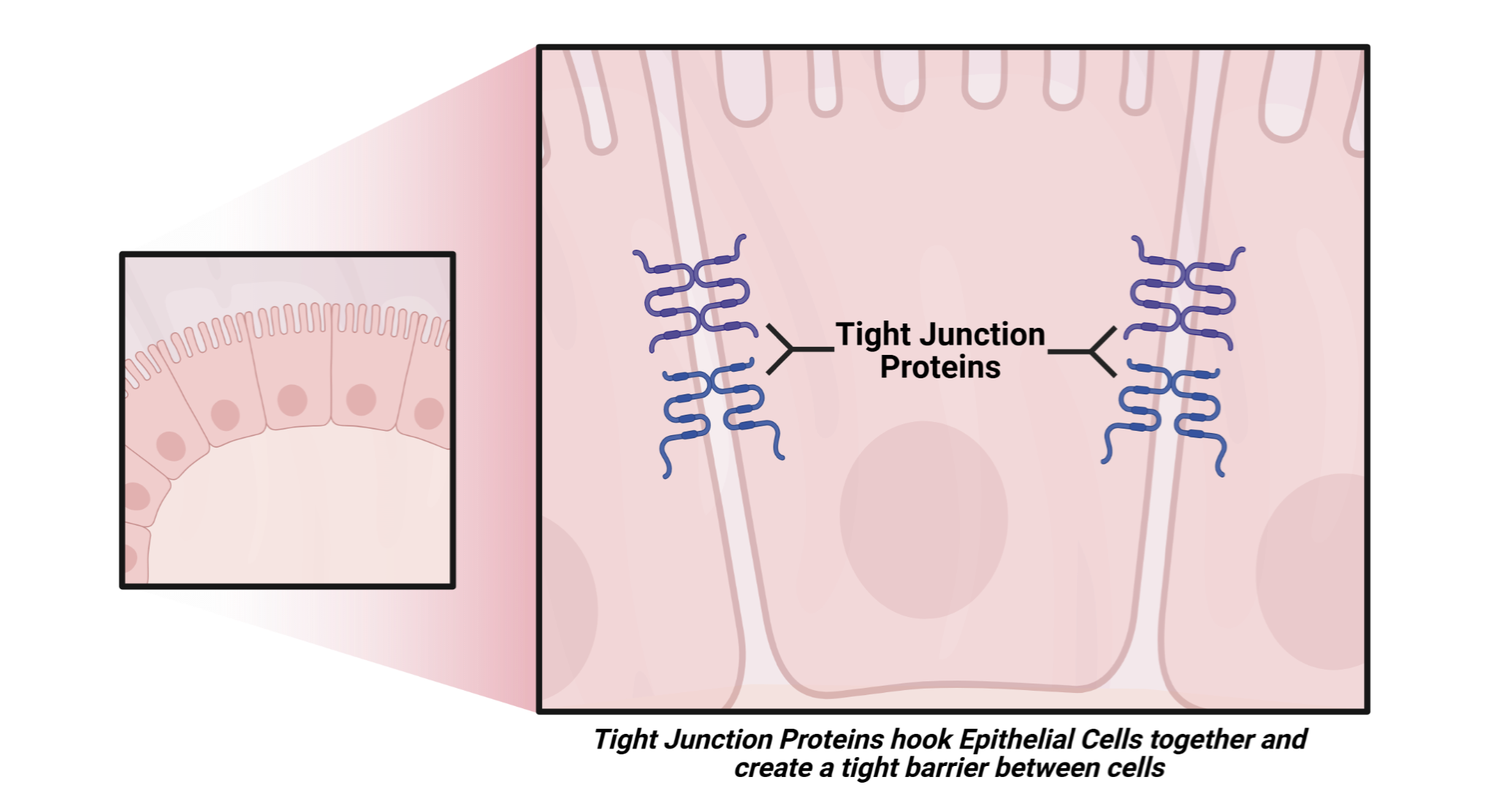
The gut barrier depends heavily on structures called tight junction proteins. These proteins help neighboring epithelial cells stay closely connected, reducing the chance that unwanted molecules can slip between them.
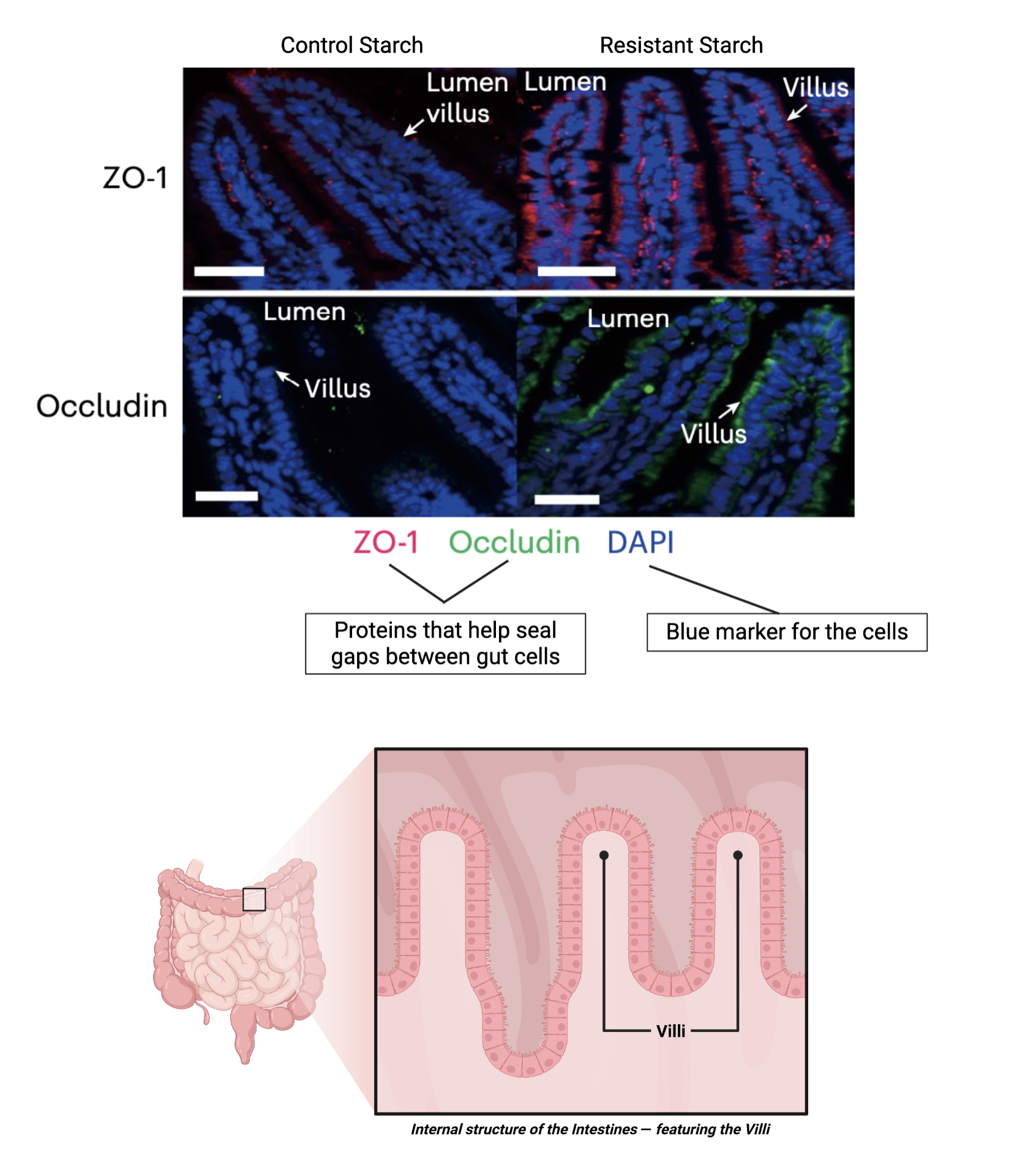
Animals exposed to resistant starch showed more of these tight junction proteins than animals that did not receive resistant starch. This suggests that resistant starch may help reinforce the gut barrier by increasing the proteins that keep epithelial cells closely connected.
However, the presence of more tight junction proteins does not directly prove that the gut is less permeable. It only suggests that the barrier may be stronger.
To test permeability more directly, researchers can give animals or humans a fluorescent-tagged sugar molecule called DX4000FITC and then measure how much appears in the bloodstream. If more of this molecule reaches the blood, that suggests more intestinal permeability (not a good thing!).
In the resistant starch condition, less DX4000FITC appeared in the blood. LPS levels were also reduced when the gut was exposed to resistant starch.
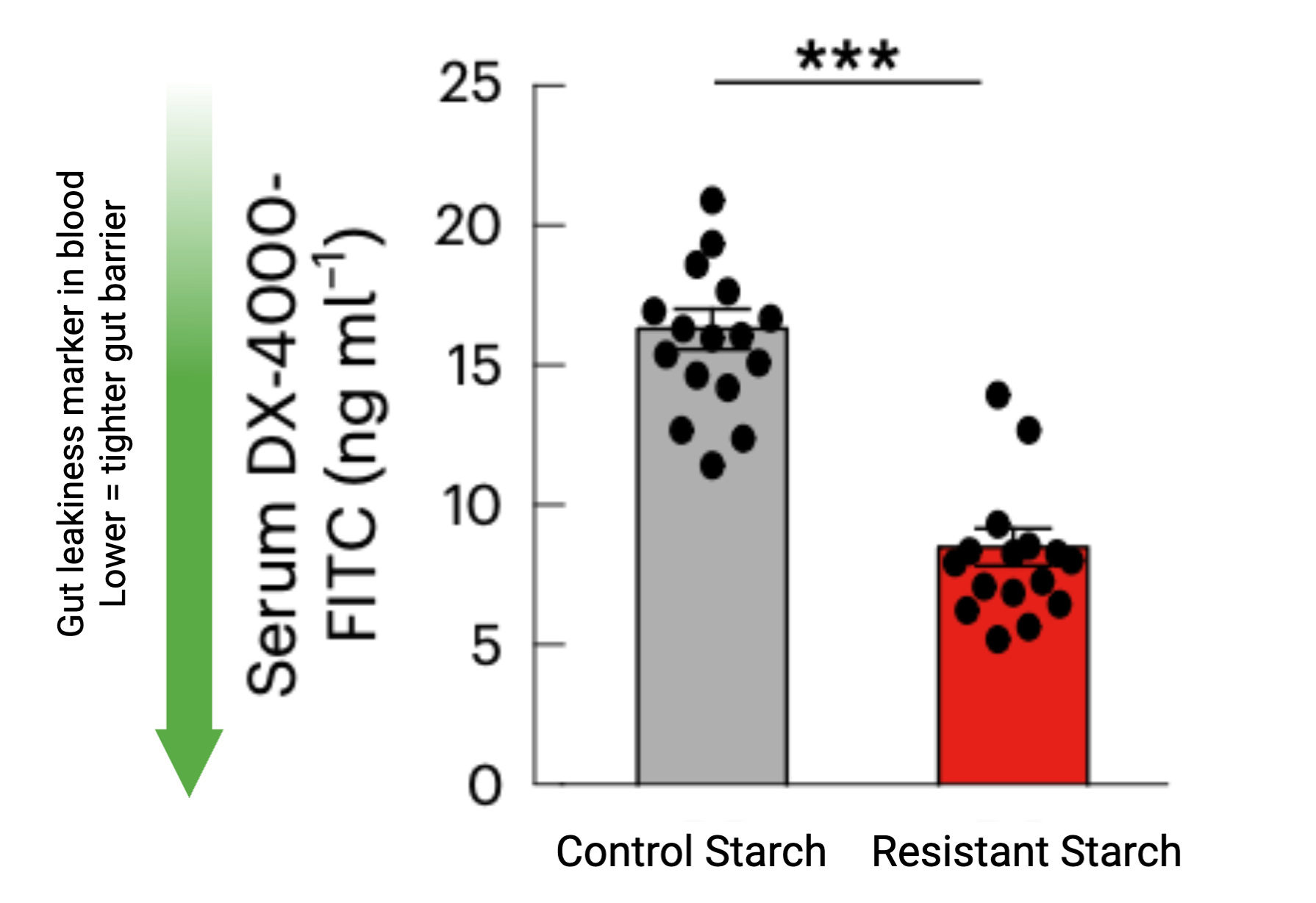
Together, these findings suggest that resistant starch can reduce gut permeability by increasing tight junction proteins between gut cells, helping the intestinal barrier remain tighter and less permissive.
Different Impact in Different People
Unique Fat Loss Mechanisms
Resistant Starch on Tissue Inflammation
Vetted Brands of Resistant Starch
All of these topics are explored in depth in the complete analysis, along with access to a private podcast, live sessions, a growing research library, and practical breakdowns—available exclusively to Physionic Insiders.
The Human Evidence Is Promising, but Still Limited
There is an important limitation: much of this work is preclinical, meaning it comes largely from mouse research. These findings are interesting and compelling, but they do not automatically translate to humans.
Human studies [606,607] are still relevant, though. In research lasting four months, people who consumed resistant starch experienced reductions in blood LPS levels compared with placebo.
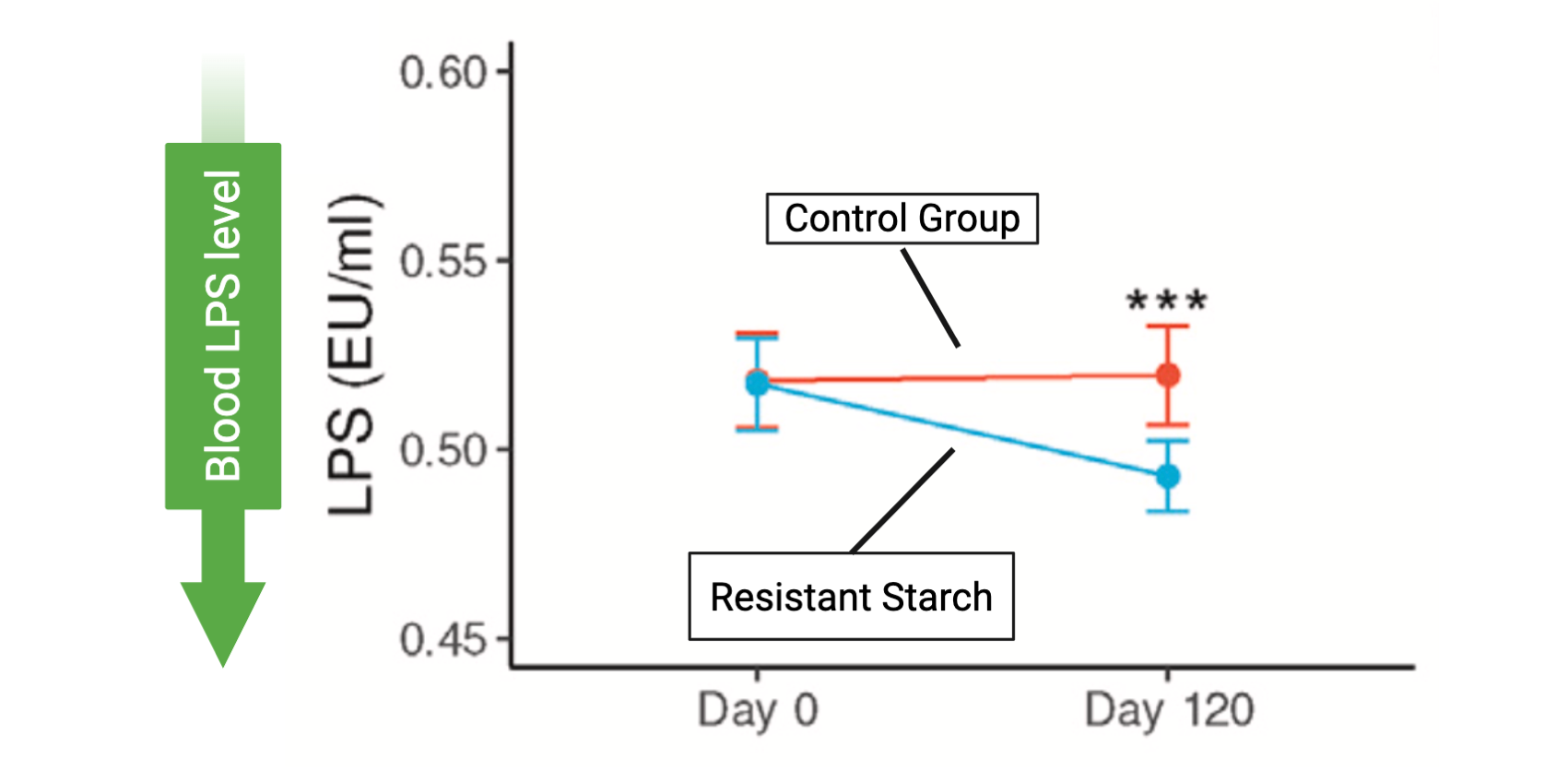
Other studies [846-848] weakly support this finding, although the evidence is less robust. These studies were smaller, often used different methods, and sometimes measured slightly different outcomes.
Overall, the evidence suggests that resistant starch may improve whole-body health not only through changes in the gut microbiome but also through improved gut barrier integrity. By reducing the inflammatory burden coming from the gut, resistant starch may have effects that extend beyond the intestine.
How Much Resistant Starch Was Used?
The most convincing studies used 40 grams of resistant starch per day.
This does not necessarily mean 40 grams of powder. Depending on the source, a powder may contain only a certain percentage of resistant starch. As a result, the total amount of powder needed is usually higher than the actual amount of resistant starch consumed.
Potential sources include green banana flour, green plantain flour, potato starch, and high-amylose maize.
A common question is whether powders can be skipped in favor of whole foods. That answer is somewhat controversial. Some foods, such as green bananas and plantains, do contain resistant starch, but reaching the 40-gram amount used in stronger studies may be difficult through food alone.
Smaller studies have used lower amounts, including around 18 grams and even as low as 3 to 4 grams. However, the evidence from these smaller-dose studies is weaker because of how the studies were conducted.
Based on the stronger evidence, 40 grams of resistant starch per day remains the more convincing target, although smaller amounts may still have benefits for gut-related outcomes.
Main Points
Resistant starch may help strengthen the gut barrier by increasing tight junction proteins such as ZO-1 and occludin. These proteins help neighboring gut cells stay closely connected, reducing intestinal permeability.
When gut permeability is reduced, fewer unwanted molecules, such as LPS, may enter the blood. This could lower the inflammatory burden coming from the gut.
The strongest mechanistic evidence comes largely from mouse research, so it should be interpreted cautiously. Human studies suggest resistant starch can reduce blood LPS, but the broader human evidence is still limited and varies in strength.
The most convincing studies used 40 grams of resistant starch per day. Lower amounts may still help, but the evidence for smaller doses is weaker.
Different Impact in Different People
Unique Fat Loss Mechanisms
Resistant Starch on Tissue Inflammation
Vetted Brands of Resistant Starch
All of these topics are explored in depth in the complete analysis, along with access to a private podcast, live sessions, a growing research library, and practical breakdowns—available exclusively to Physionic Insiders.
Dr. Nicolas Verhoeven, PhD / Physionic
References
[Study 606] Ni Y, Qian L, Leal Siliceo S, et al. Resistant starch decreases intrahepatic triglycerides in patients with NAFLD via gut microbiome alterations. Cell Metab. 2023;35(9):1530-1547. doi:10.1016/j.cmet.2023.08.002
Funding/Conflicts: Public Funding: From the study, support was provided by the National Natural Science Foundation of China, Shanghai Municipal Key Clinical Specialty, Shanghai Research Center for Endocrine and Metabolic Diseases, National Key Research and Development Program of China, Marie Skłodowska-Curie Actions/Innovative Training Networks, Shanghai Jiao Tong University School of Medicine, Dalian Institute of Chemical Physics/Chinese Academy of Sciences, and the Key Foundation; Non-Profit Funding: From the study, no non-profit funding source was reported; Industry Funding: From the study, no industry funding source was reported, and the authors declared no competing interests.
[Study 607] Long X, Wang H, Lu Y, et al. Interindividual variability in gut microbiome mediates the efficacy of resistant starch on MASLD. Cell Metab. 2025;37:2342-2361. doi:10.1016/j.cmet.2025.10.017
Funding/Conflicts: Public Funding: From the study, the work was supported by the National Natural Science Foundation of China, Shanghai Municipal Key Clinical Specialty, Shanghai Research Center for Endocrine and Metabolic Diseases, the National Key Research and Development Program of China, Shanghai Jiao Tong University School of Medicine, Dalian Institute of Chemical Physics of the Chinese Academy of Sciences, and a Key Foundation; Non-Profit Funding: From the study, support also came from Marie Skłodowska-Curie Actions and the Horizon 2020 Innovative Training Networks program BestTreat; Industry Funding: From the study, no industry funding source was reported, and the authors declared no conflicts of interest.
[Study 608] Li H, Zhang L, Li J, et al. Resistant starch intake facilitates weight loss in humans by reshaping the gut microbiota. Nat Metab. 2024;6(3):578-597. doi:10.1038/s42255-024-00988-y
Funding/Conflicts: Public Funding: From the study, the work was supported by the National Key Research and Development Program of China, Shanghai Municipal Key Clinical Specialty, Shanghai Research Center for Endocrine and Metabolic Diseases, multiple National Natural Science Foundation of China grants, Hong Kong Research Grant Council, Marie Sklodowska-Curie Actions/Innovative Training Networks, DFG under Germany’s Excellence Strategy, Shenzhen Basic Research Program, Guangdong Basic and Applied Research Major Program, Strategic Priority Research Program of the Chinese Academy of Sciences, and related university/public research programs; Non-Profit Funding: From the study, no non-profit funding source was reported; Industry Funding: From the study, the resistant starch and control starch were provided by Ingredion, but no industry funding source was reported, and the authors declared no competing interests.
[Study 846] Cao S, Shaw EL, Quarles WR, et al. Daily inclusion of resistant starch-containing potatoes in a Dietary Guidelines for Americans dietary pattern does not adversely affect cardiometabolic risk or intestinal permeability in adults with metabolic syndrome: A randomized controlled trial. Nutrients. 2022;14(8):1545. doi:10.3390/nu14081545
Funding/Conflicts: Public Funding: From the study, support was provided to RSB by the Ohio Agricultural Research and Development Center at Ohio State University and the USDA-HATCH program; Non-Profit Funding: From the study, the work was supported by a grant from the Alliance of Potato Research and Education, and the sponsor had no role in the design, conduct, analysis, or interpretation of the research; Industry Funding: From the study, no industry funding source was reported, but RSB received honoraria from the Alliance of Potato Research and Education and the National Dairy Council for scientific review activities and served on the advisory board for Gem Health, Inc., while the other authors declared no conflicts of interest.
[Study 847] Bush JR, Han J, Deehan EC, et al. Resistant potato starch supplementation reduces serum histamine levels in healthy adults with links to attenuated intestinal permeability. J Funct Foods. 2023;108:105740. doi:10.1016/j.jff.2023.105740
Funding/Conflicts: Public Funding: From the study, funding included Canadian Agricultural Partnership–AgAction Manitoba, and work at the University of Victoria–Genome BC Proteomics Centre was supported through Genome Canada/Genome British Columbia funding; Non-Profit Funding: From the study, no non-profit funding source was reported; Industry Funding: From the study, MSP Starch Products Inc. co-funded the work, the study used Solnul resistant potato starch from MSP Starch Products Inc., and the accessible paper record lists a declaration of competing interest, with related records noting MSP employment/contracted metabolomics involvement.
[Study 848] Rabbani GH, Teka T, Saha SK, et al. Green banana and pectin improve small intestinal permeability and reduce fluid loss in Bangladeshi children with persistent diarrhea. Dig Dis Sci. 2004;49(3):475-484.
Funding/Conflicts: Public Funding: From the study, the work was supported by a United States Agency for International Development grant to the International Centre for Diarrheal Disease Research, Bangladesh; Non-Profit Funding: From the study, no non-profit funding source was reported; Industry Funding: From the study, no industry funding source was reported, and no conflict-of-interest statement was found in the accessible article text.
The microbiome will very from species to species. That means different resistant starch will be more effective in one than another. We need a variety of resistant starch to feed different bacteria most effectively. Lots of vegetables, whole grains, seeds and resistant starch supplements. I love fried plantains but really green bananas are too much so it will have to be out of a bag. You can get used to chicory drink and get some inulin as well, not too much though.