
The Mortality Effect of Walnuts is Hard to Ignore

Main Points
Overall nut consumption consistently tracked with a reduced risk of all-cause mortality. None of the individual studies included in the main meta-analysis showed an increased risk of death from eating nuts.
Most of the observed benefit occurred at approximately 15 grams of nuts per day, which is about half of a standard serving. Increasing intake beyond this amount produced little additional change in overall mortality risk.
Walnut consumption was specifically associated with reduced total mortality in both men and women. The relationship may begin at a lower consumption level among women, while it appeared more clearly at higher levels among men.
Walnut consumption remained associated with reduced mortality even among people who already followed relatively healthy diets.
The available evidence suggests that consuming walnuts two to four times per week (28 grams, 2-4 times per week), averaging approximately 15 grams per day (7 days a week), is associated with a mild but consistent reduction in mortality risk.
Have you ever taken a close look at a walnut? Its wrinkled appearance may not immediately suggest youth or longevity, but could eating walnuts and other nuts help people live longer?
To investigate this question, I analyzed 15 studies. Much of the investigation was based on a meta-analysis [878] of 20 prospective studies, followed by a closer examination of as many individual studies from that analysis as possible.
Overall Nut Consumption and Mortality
The first question is whether overall nut consumption is associated with a lower risk of all-cause mortality, meaning death from any cause.
When the results from the studies were combined, nut consumption was clearly associated with a reduced risk of death. Another striking observation was that none of the individual studies showed an increased mortality risk from eating nuts.
Based on these data, nuts appear unlikely to increase mortality risk. However, this finding does not yet tell us specifically about walnuts, and meta-analyses of observational studies have important limitations.
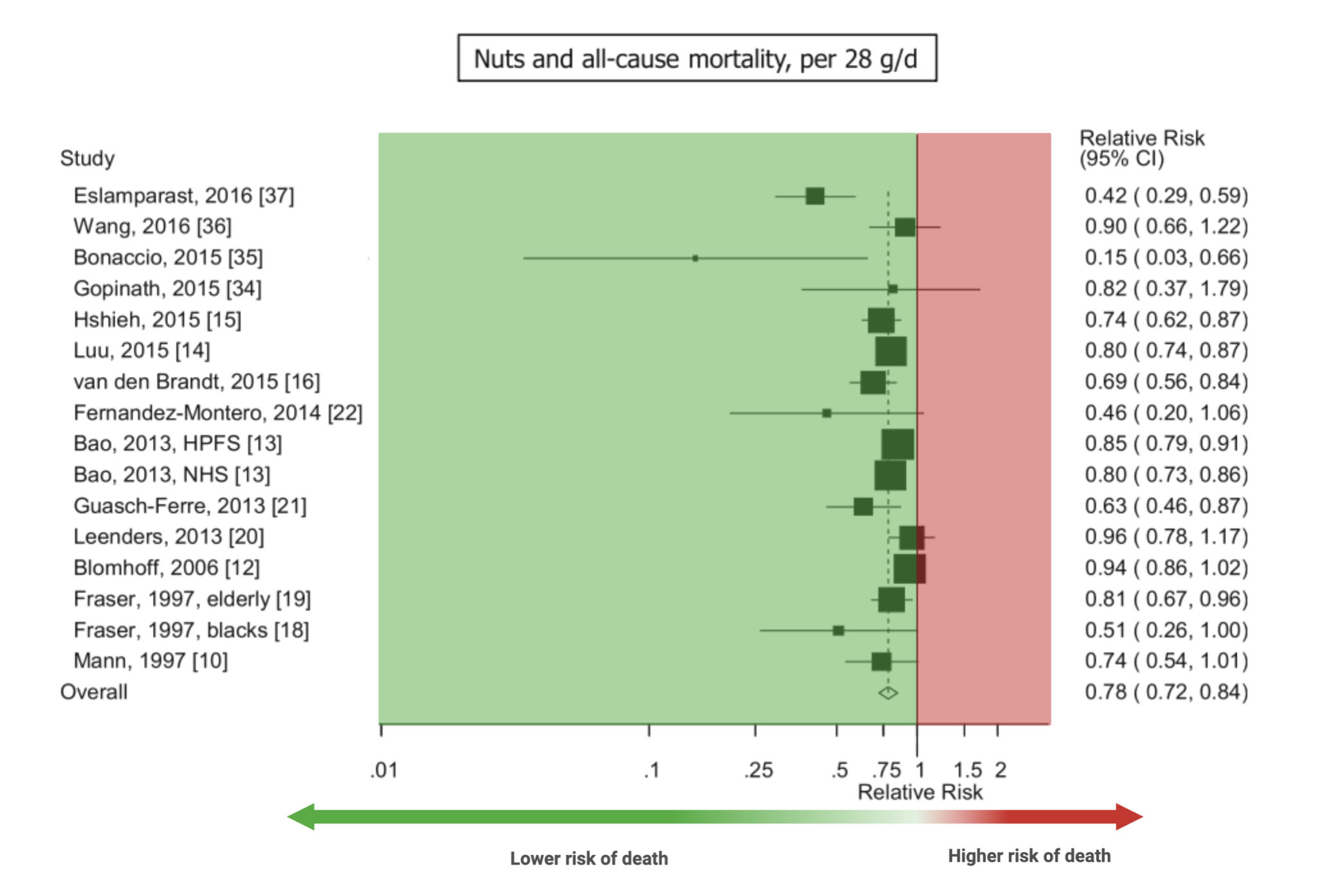
The analysis accounted for factors such as age, education, family history of disease, body weight, smoking, alcohol consumption, physical activity, and certain aspects of diet. Beyond these factors, the adjustments (factors accounted for that could be the real explanation for the relationship) varied considerably among the studies. One study might account for saturated fat consumption, while another might adjust for red meat or added sugar.
These differences can influence the results. The overall analysis still provides useful information about the relationship between nut consumption and mortality, but individual studies must be examined critically to understand the association more clearly.
How Much Nut Consumption Is Associated With Benefit?
A dose-response analysis provides a clearer picture of how the amount consumed relates to mortality risk.
The risk of death initially declined as nut consumption increased, with most of the reduction occurring by approximately 15 grams per day. Beyond that amount, the relationship largely plateaued.
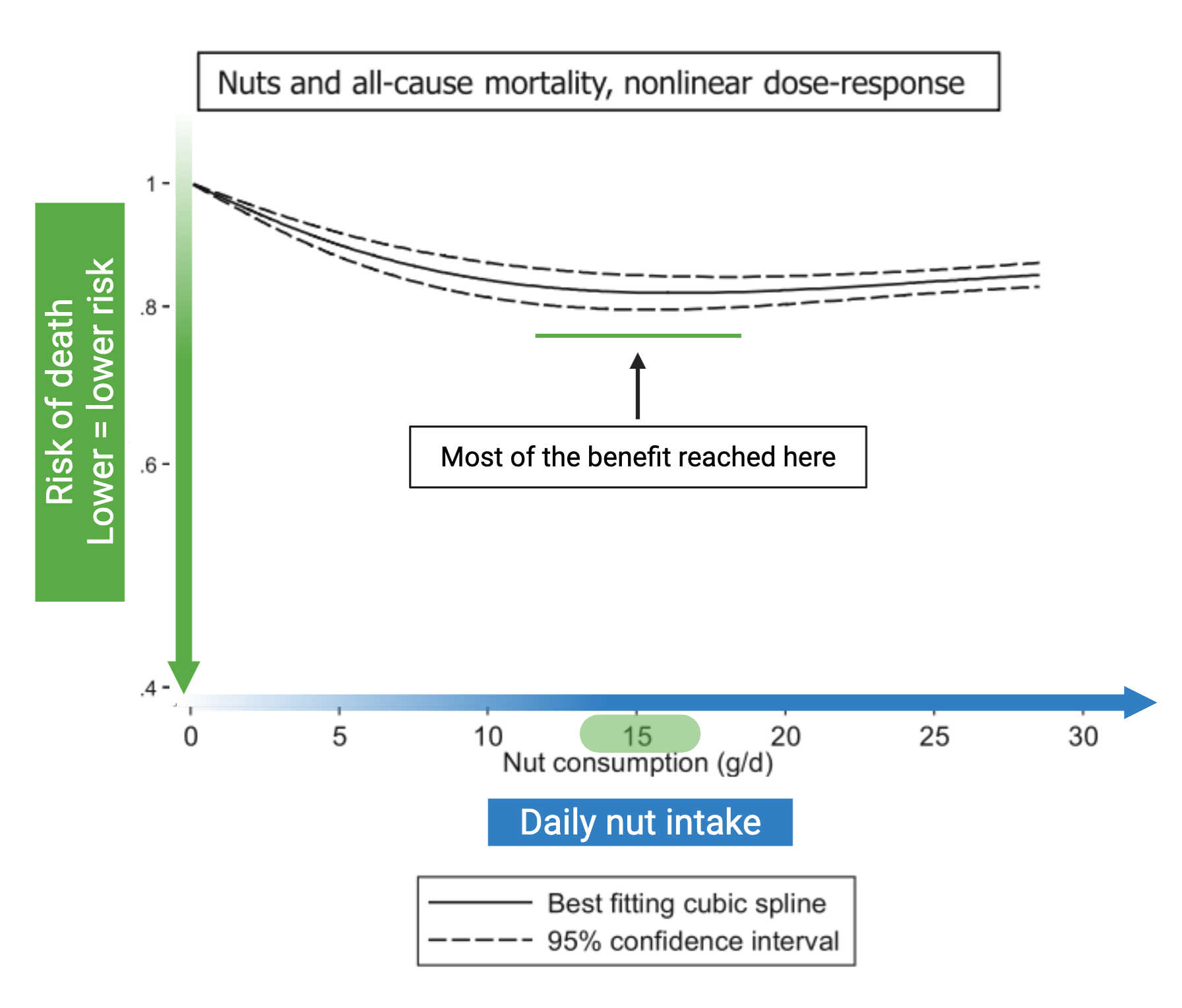
This suggests that approximately 15 grams of nuts per day, or about half of a standard serving, is associated with most of the observed mortality benefit.
Peanut and Tree Nut Analysis
Nuts on Cardiovascular Health and Cancer
Peanuts vs Peanut Butter
All of these topics are explored in depth in the complete analysis, along with access to a private podcast, live sessions, a growing research library, and practical breakdowns—available exclusively to Physionic Insiders.
Turning the Focus to Walnuts
Although overall nut consumption is associated with reduced mortality, different nuts may not produce identical relationships.
An overall category can sometimes conceal important differences. It is theoretically possible for one type of nut to have an unfavorable relationship, while the effects of other nuts produce a favorable combined result. Ideally, each nut would be evaluated individually.
The available studies that specifically examined walnut consumption reported a robust association with reduced mortality [876, 885].
When men and women were analyzed together, greater walnut consumption was associated with a lower risk of death. When the data were separated by sex, the overall benefit appeared broadly similar for women and men, although women may have experienced an association at lower levels of consumption.
Among women, mortality risk continued to decline across increasing levels of walnut consumption. Among men, the relationship appeared more clearly at higher consumption levels.
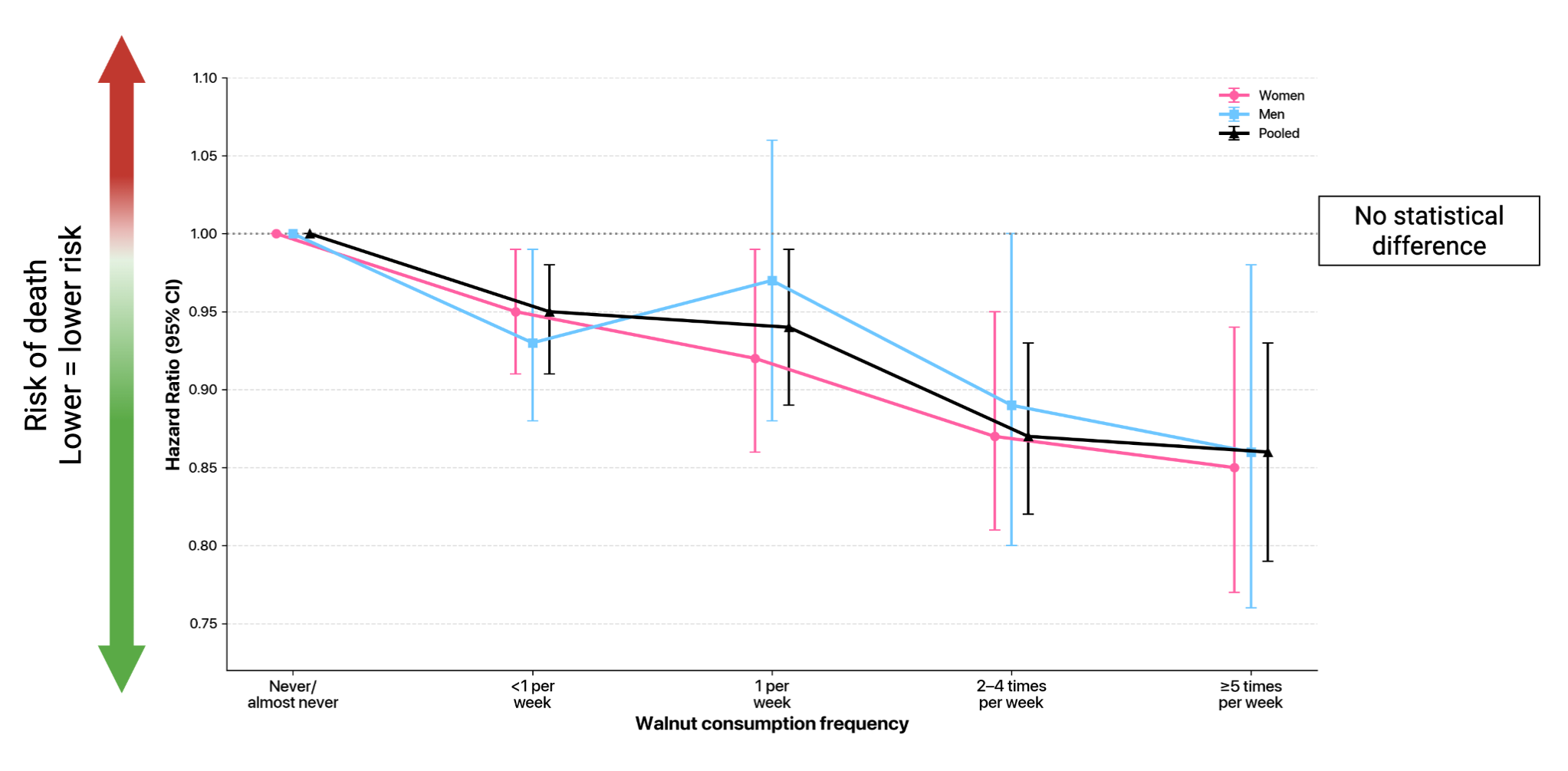
Overall, the reduced mortality relationship observed with total nut consumption also applied specifically to walnuts.
Do Walnuts Still Help When the Overall Diet Is Healthy?
One important question is whether walnuts are associated with benefit only when added to a relatively poor diet.
Adding a healthful food to a poor diet could naturally produce an improvement, regardless of the specific food. Reverse causation is also possible because people who follow healthier diets may be more likely to eat walnuts and may already have a lower mortality risk for other reasons.
Researchers addressed this concern by separating participants according to overall diet quality using the Alternate Healthy Eating Index, or AHEI.
The AHEI score considers the consumption of vegetables, fruits, whole grains, nuts, legumes, omega-3 fats, and polyunsaturated fats. It also considers the intake of sugar-sweetened beverages, processed meats, trans fats, and other dietary factors. Higher scores indicate better diet quality according to these criteria.
The index is not perfect, but it allows participants with poorer diets to be compared with those whose diets are considered healthier.
Walnut consumption was associated with reduced mortality regardless of overall diet quality.
Even among people who already followed relatively healthy diets, adding walnuts was linked to a further reduction in mortality risk.
How Many Walnuts May Be Enough?
The earlier dose-response analysis suggested that approximately 15 grams of total nuts per day was associated with most of the mortality benefit. However, the walnut-specific data were not presented with the same level of precision.
The best available estimate is that consuming walnuts two to four times per week is associated with a mild but consistent reduction in mortality risk, with somewhat stronger evidence toward the higher end of that range.
A standard serving of walnuts is approximately 28 grams. Consuming one serving three or four times per week averages roughly 14 to 16 grams per day across the entire week.
This estimate closely matches the dose-response findings for total nut consumption. The lower threshold associated with a notable mortality benefit therefore appears to be approximately half a serving of walnuts per day, or around 15 grams.
Main Points
Overall nut consumption consistently tracked with a reduced risk of all-cause mortality. None of the individual studies included in the main meta-analysis showed an increased risk of death from eating nuts.
Most of the observed benefit occurred at approximately 15 grams of nuts per day, which is about half of a standard serving. Increasing intake beyond this amount produced little additional change in overall mortality risk.
Walnut consumption was specifically associated with reduced total mortality in both men and women. The relationship may begin at a lower consumption level among women, while it appeared more clearly at higher levels among men.
Walnut consumption remained associated with reduced mortality even among people who already followed relatively healthy diets.
The available evidence suggests that consuming walnuts two to four times per week (28 grams, 2-4 times per week), averaging approximately 15 grams per day (7 days a week), is associated with a mild but consistent reduction in mortality risk.
Peanut and Tree Nut Analysis
Nuts on Cardiovascular Health and Cancer
Peanuts vs Peanut Butter
All of these topics are explored in depth in the complete analysis, along with access to a private podcast, live sessions, a growing research library, and practical breakdowns—available exclusively to Physionic Insiders.
Dr. Nicolas Verhoeven, PhD / Physionic
References
[Study 876] Liu X, Guasch-Ferré M, Tobias DK, Li Y. Association of walnut consumption with total and cause-specific mortality and life expectancy in U.S. adults. Nutrients. 2021;13(8):2699. doi:10.3390/nu13082699. PMID: 34444859.
Funding/Conflicts: Public Funding: From the study, the work was funded by NIH grants UM1 CA186107 and U01 CA167552; Non-Profit Funding: From the study, no non-profit funding source was reported; Industry Funding: From the study, Li received research support from the California Walnut Commission, the funder had no role in the study design, conduct, data collection, analysis, interpretation, manuscript preparation, review, or decision to publish, and all other authors reported no relevant relationships to disclose.
[Study 877] Guasch-Ferré M, Liu X, Malik VS, et al. Nut consumption and risk of cardiovascular disease. J Am Coll Cardiol. 2017;70(20):2519–2532. doi:10.1016/j.jacc.2017.09.035. PMID: 29145952.
Funding/Conflicts: Public Funding: From the study, the work was supported by NIH grants UM1 CA186107, R01 HL034594, R01 HL088521, UM1 CA176726, UM1 CA167552, R01 HL35464, and R01 HL60712, and Dr. Bhupathiraju was supported by NIH Career Development Grant K01 DK107804; Non-Profit Funding: From the study, no non-profit funding source was reported; Industry Funding: From the study, no direct industry funding source for the study was reported, but Dr. Malik received research support from the Peanut Institute, Drs. Li and Hu received research support from the California Walnut Commission, and the authors stated that neither the corresponding author nor other authors had any conflict of interest affecting the conduct or reporting of the submitted work.
[Study 878] Aune D, Keum N, Giovannucci E, et al. Nut consumption and risk of cardiovascular disease, total cancer, all-cause and cause-specific mortality: A systematic review and dose-response meta-analysis of prospective studies. BMC Med. 2016;14:207. doi:10.1186/s12916-016-0730-3. PMID: 27916000.
Funding/Conflicts: Public Funding: From the study, the Liaison Committee between the Central Norway Regional Health Authority and the Norwegian University of Science and Technology, and the Imperial College National Institute for Health Research Biomedical Research Centre; Non-Profit Funding: From the study, Olav og Gerd Meidel Raagholt’s Foundation for Medical Research; Industry Funding: From the study, no industry funding was disclosed, and the authors declared no competing interests. The funding sources had no role in the study design, data collection or analysis, manuscript preparation, or publication decision.
[Study 879] Blomhoff R, Carlsen MH, Andersen LF, Jacobs DR Jr. Health benefits of nuts: Potential role of antioxidants. Br J Nutr. 2006;96 Suppl 2:S52–S60. doi:10.1017/BJN20061864. PMID: 17125534.
Funding/Conflicts: Public Funding: From the study, the Research Council of Norway provided support for projects related to antioxidants and oxidative stress; Non-Profit Funding: From the study, the Throne Holst Foundation and the Norwegian Cancer Society provided support for projects related to antioxidants and oxidative stress; Industry Funding: From the study, no industry funding or competing-interest disclosure was reported.
[Study 880] Bao Y, Han J, Hu FB, et al. Association of nut consumption with total and cause-specific mortality. N Engl J Med. 2013;369(21):2001–2011. doi:10.1056/NEJMoa1307352. PMID: 24256379.
Funding/Conflicts: Public Funding: From the study, supported by National Institutes of Health grants UM1 CA167552, P01 CA87969, R01 HL60712, R01 CA124908, P50 CA127003, and 1U54 CA155626-01; Non-Profit Funding: From the study, no independent non-profit funding was disclosed; Industry Funding: From the study, supported by a research grant from the International Tree Nut Council Nutrition Research & Education Foundation, a non-profit organization representing the tree-nut industries; no direct commercial company funding or specific author conflicts were reported in the main article text.
[Study 881] Luu HN, Blot WJ, Xiang YB, et al. Prospective evaluation of the association of nut/peanut consumption with total and cause-specific mortality. JAMA Intern Med. 2015;175(5):755–766. doi:10.1001/jamainternmed.2014.8347. PMID: 25730101.
Funding/Conflicts: Public Funding: From the study, supported by the US National Cancer Institute through grants R37 CA070867, R01 CA082729, UM1 CA173640, and R01 CA092447; Non-Profit Funding: From the study, no non-profit funding was disclosed; Industry Funding: From the study, no industry funding was disclosed, and the authors reported no conflicts of interest. The funding organizations had no role in the study design, conduct, data collection, analysis, interpretation, manuscript preparation, review, approval, or publication decision.
[Study 882] Hshieh TT, Petrone AB, Gaziano JM, Djoussé L. Nut consumption and risk of mortality in the Physicians’ Health Study. Am J Clin Nutr. 2015;101(2):407–412. doi:10.3945/ajcn.114.099846. PMID: 25646339.
Funding/Conflicts: Public Funding: From the study, supported by National Heart, Lung, and Blood Institute grant R21 HL088081; the Physicians’ Health Study was supported by National Cancer Institute grants CA-34944, CA-40360, and CA-097193 and National Heart, Lung, and Blood Institute grants HL-26490 and HL-34595; Tammy T. Hshieh was supported by NIH training grant T32 AG000158; Non-Profit Funding: From the study, no non-profit funding was disclosed; Industry Funding: From the study, no industry funding was disclosed, and no competing interests were reported. The funding sources had no role in the study’s design, conduct, or reporting.
[Study 883] Fraser GE, Shavlik DJ. Risk factors for all-cause and coronary heart disease mortality in the oldest-old: The Adventist Health Study. Arch Intern Med. 1997;157(19):2249–2258. PMID: 9343002.
Funding/Conflicts: Public Funding: From the study, supported by National Institutes of Health funding through the National Institute on Aging, grant 1 R01 AG08961-01A2; Non-Profit Funding: From the study, no independent non-profit funding was disclosed; Industry Funding: From the study, no industry funding was disclosed, and no competing-interest statement was identified in the available article record.
[Study 884] Leenders M, Sluijs I, Ros MM, et al. Fruit and vegetable consumption and mortality: European Prospective Investigation Into Cancer and Nutrition. Am J Epidemiol. 2013;178(4):590–602. doi:10.1093/aje/kwt006. PMID: 23599238.
Funding/Conflicts: Public Funding: From the study, supported by the European Commission (DG-SANCO), International Agency for Research on Cancer, INSERM, German Cancer Research Center, German Federal Ministry of Education and Research, Greek Ministry of Health and Social Solidarity, Italian National Research Council, Dutch Ministry of Public Health, Welfare and Sports, Dutch Prevention Funds, ZON, Statistics Netherlands, European Research Council, NordForsk, Spanish Health Research Fund and regional governments, Instituto de Salud Carlos III, Swedish Scientific Council and regional governments, UK Medical Research Council, Department of Health, and Food Standards Agency; Non-Profit Funding: From the study, supported by the Danish Cancer Society, Ligue Contre le Cancer, Institut Gustave Roussy, Mutuelle Générale de l’Education Nationale, Deutsche Krebshilfe, Stavros Niarchos Foundation, Hellenic Health Foundation, Italian Association for Research on Cancer, Netherlands Cancer Registry, LK Research Funds, World Cancer Research Fund, Swedish Cancer Society, Cancer Research UK, Stroke Association, British Heart Foundation, and Wellcome Trust; Industry Funding: From the study, no industry funding was disclosed, and the authors declared no conflicts of interest. The funding organizations had no role in the study’s design, conduct, data management or analysis, interpretation, or manuscript preparation, review, or approval.
[Study 885] Guasch-Ferré M, Bulló M, Martínez-González MÁ, et al. Frequency of nut consumption and mortality risk in the PREDIMED nutrition intervention trial. BMC Med. 2013;11:164. doi:10.1186/1741-7015-11-164. PMID: 23866098.
Funding/Conflicts: Public Funding: From the study, supported in part by the Spanish Ministry of Health through the Instituto de Salud Carlos III grants PI1001407, Thematic Network G03/140, and RD06/0045, as well as the European Regional Development Fund; Non-Profit Funding: From the study, supported by the Centre Català de la Nutrició de l’Institut d’Estudis Catalans, while the Institut d’Investigació Sanitària Pere Virgili received research funding from the International Nut and Dried Fruit Foundation; Industry Funding: From the study, Jordi Salas-Salvadó received grants from and served as an unpaid scientific advisory board member of the International Nut and Dried Fruit Foundation, and Emilio Ros received grants from and served as an unpaid scientific advisory committee member of the California Walnut Commission; no relevant conflicts were reported for the other authors. The funders had no role in the study’s design, data collection, analysis, interpretation, manuscript preparation, or publication decision.
[Study 886] Fernández-Montero A, Bes-Rastrollo M, Barrio-López MT, de la Fuente-Arrillaga C, Salas-Salvadó J, Moreno-Galarraga L, Martínez-González MA. Nut consumption and five-year all-cause mortality in a Mediterranean cohort: The SUN project. Nutrition. 2014;30(9):1022–1027. doi:10.1016/j.nut.2014.02.018. PMID: 24976427.
Funding/Conflicts: Public Funding: From the study, the SUN Project received funding from the Spanish Government through grants PI01/0619, PI030678, PI040233, PI042241, PI050976, PI070240, PI070312, PI081943, PI080819, PI1002658, PI1002293, PI13/00615, RD06/0045, and G03/140, and from the Navarra Regional Government through grants 36/2001, 43/2002, 41/2005, 36/2008, and 45/2011; Non-Profit Funding: From the study, the University of Navarra provided support; Industry Funding: From the study, no industry funding was disclosed, and no specific author conflict-of-interest statement was identified in the available article record.
[Study 887] Gopinath B, Flood VM, Burlutsky G, Mitchell P. Consumption of nuts and risk of total and cause-specific mortality over 15 years. Nutr Metab Cardiovasc Dis. 2015;25(12):1125–1131. doi:10.1016/j.numecd.2015.09.006. PMID: 26607701.
Funding/Conflicts: Public Funding: From the study, the Blue Mountains Eye and Hearing Studies were supported by the Australian National Health and Medical Research Council through grants 974159, 991407, 211069, and 262120; Non-Profit Funding: From the study, no non-profit funding was disclosed; Industry Funding: From the study, no industry funding was disclosed, and the authors declared no conflicts of interest.
[Study 888] Bonaccio M, Di Castelnuovo A, De Curtis A, et al. Nut consumption is inversely associated with both cancer and total mortality in a Mediterranean population: Prospective results from the Moli-sani study. Br J Nutr. 2015;114(5):804–811. doi:10.1017/S0007114515002378.
Funding/Conflicts: Public Funding: From the study, the enrolment phase of the Moli-sani Project was supported by the Italian Ministry of University and Research through the Programma Triennale di Ricerca, Decreto No. 1588; Non-Profit Funding: From the study, the Associazione Cuore Sano Onlus provided financial support, and Marialaura Bonaccio was supported by a Fondazione Umberto Veronesi Fellowship; Industry Funding: From the study, the enrolment phase was supported by research grants from the Pfizer Foundation and Instrumentation Laboratory, Milan, Italy. The funders had no role in the study design, data collection, analysis, interpretation, manuscript preparation, or publication decision; the authors stated that they were independent of the funders and declared no conflicts of interest.
[Study 889] Wang JB, Fan JH, Dawsey SM, et al. Dietary components and risk of total, cancer and cardiovascular disease mortality in the Linxian Nutrition Intervention Trials cohort in China. Sci Rep. 2016;6:22619. doi:10.1038/srep22619. PMID: 26939909.
Funding/Conflicts: Public Funding: From the study, supported in part by National Cancer Institute contracts N01-SC-91030 and N01-RC-47701 awarded to the Cancer Institute, Chinese Academy of Medical Sciences; the Intramural Research Program of the Division of Cancer Epidemiology and Genetics, National Cancer Institute, National Institutes of Health; and the Cancer Institute, Chinese Academy of Medical Sciences; Non-Profit Funding: From the study, no non-profit funding was disclosed; Industry Funding: From the study, no industry funding was disclosed, and the authors declared no competing financial interests. The study sponsor had no role in the study design, data collection, analysis, interpretation, publication decision, or manuscript preparation.
[Study 890] Eslamparast T, Sharafkhah M, Poustchi H, et al. Nut consumption and total and cause-specific mortality: Results from the Golestan Cohort Study. Int J Epidemiol. 2017;46(1):75–85. doi:10.1093/ije/dyv365. PMID: 26946539.
Funding/Conflicts: Public Funding: From the study, supported by Tehran University of Medical Sciences, the Intramural Research Program of the U.S. National Cancer Institute, and collaborative research agreements with the International Agency for Research on Cancer; Non-Profit Funding: From the study, supported by Cancer Research UK; Industry Funding: From the study, no industry funding was disclosed, and the authors declared no conflicts of interest.