
This Odd Fasting Method Shreds Visceral Fat More Than Healthy Diets

Main Points
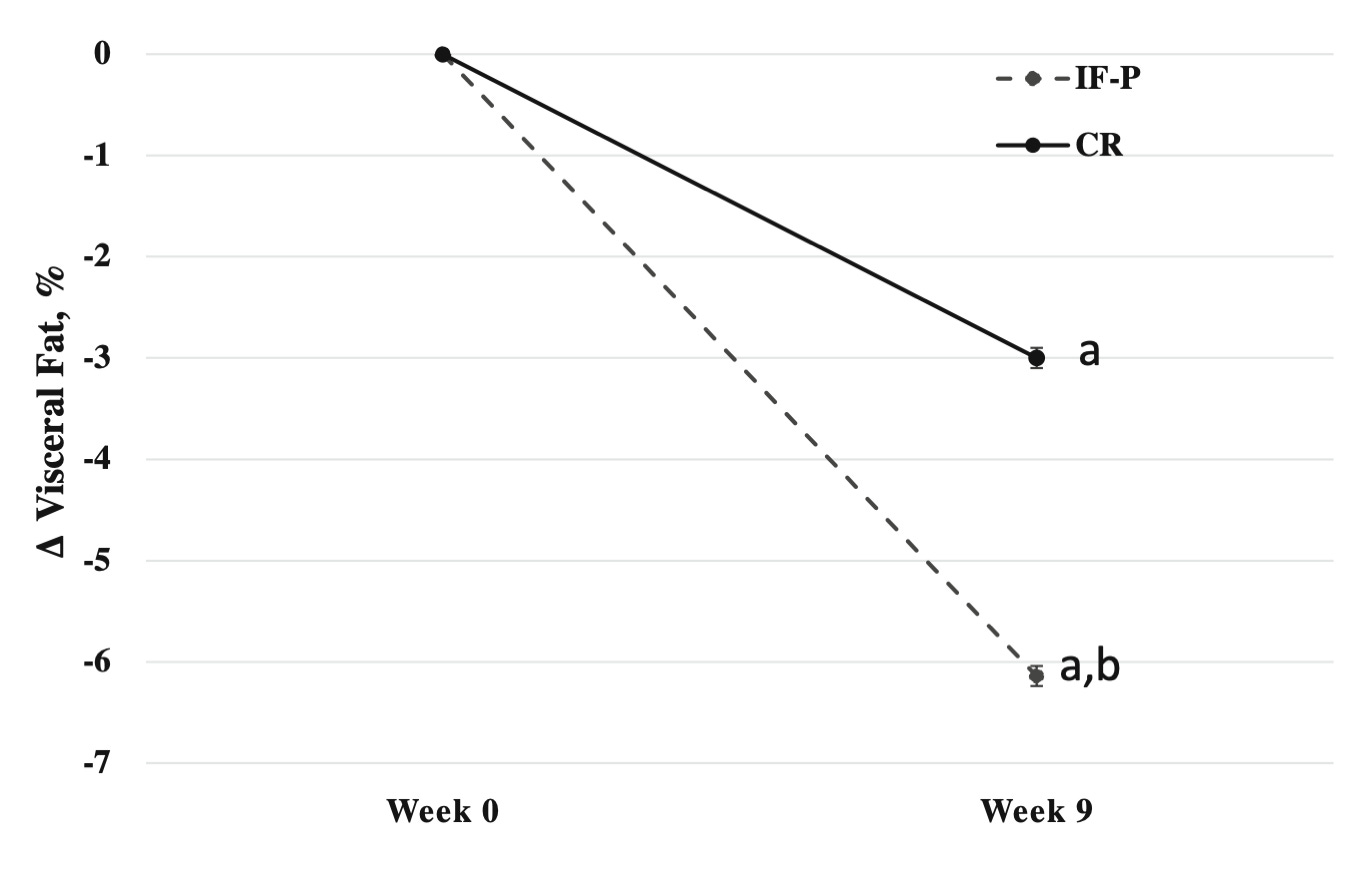
If your goal is to reduce visceral fat—the organ-surrounding fat most closely tied to cardiometabolic risk—an approach that pairs a weekly ~36-hour quasi-fast (allowing a single ~400-calorie nutrient-dense snack) with protein pacing on non-fast days (4–5 meals/day, each with protein; ~35/35/30% macros) can deliver roughly double the visceral fat loss versus a conventional heart-healthy calorie-restricted diet over 8–9 weeks. Reported calories and activity were similar between groups, suggesting factors like higher protein intake and unmeasured metabolic effects may contribute. While the sample was modest and the duration short, the magnitude and speed of visceral fat reduction make this strategy a compelling option for targeted fat loss.
Visceral fat is the fat that sits deep in the abdomen around your organs—your liver, kidneys, heart, and others. It’s been linked to higher risk for conditions like type 2 diabetes and coronary artery disease: generally, the more visceral fat you carry, the higher the risk [492]. That harmful relationship is a key reason to target this fat specifically, not just total body fat.
The Unconventional Fasting Approach
Participants of this odd randomized controlled trial [A] were randomly assigned to follow either an intermittent fasting approach or a heart-healthy nutrition plan. The fasting approach is unusual because it isn’t a pure, zero-calorie fast. Instead, it uses a roughly 36-hour “quasi-fast” that still allows one small snack and, on the other days, a “protein pacing” routine.
During the 36-hour fasting window, participants consumed a single ~400-calorie snack composed of antioxidant- and adaptogen-rich items along with other foods. This is part of what makes the method “odd”—you’re not at absolute zero calories—but the results are the point of interest.
What “Protein Pacing” Means
Outside the 36-hour fast, participants ate 4–5 evenly spaced meals per day, each including protein. A practical day looked like:
Breakfast: Protein shake with fruit and vegetables
Lunch: Protein shake
Snack: 200-calorie snack (men only)
Dinner: Whole-food dinner
Evening Snack: ~200-calorie protein snack
On these non-fasting days, approximate energy targets were ~1,350 kcal for women and ~1,700 kcal for men, with macronutrients around 35% protein, 35% carbohydrate, and 30% fat.
The Comparison: A Heart-Healthy Calorie-Restricted Diet
The comparison group followed a heart-healthy plan: about 1,200 kcal for women and 1,500 kcal for men, 50–60% carbohydrate, <35% fat, and the remainder protein (about 15%). They kept sugar to <50 g/day and aimed for 20–30 g/day of fiber.
What Happened to Visceral Fat
Across roughly 8–9 weeks, both groups lost visceral fat. But the intermittent fasting + protein (IF+P) pacing group doubled the visceral fat loss on an absolute basis compared with the heart-healthy calorie restriction (CR) group. In other words, while a conventional “healthy diet” did help, the fasting-plus-pacing strategy was substantially more effective for this specific target.
A simpler version of the Protein Pacing Fast
Was heart health improved?
Additional considerations when considering this type of ‘fast’
All of that is included in the complete analysis, along with access to a private podcast, live sessions with me, a library of articles and videos, and much more as a Physionic Insider:
Can We Explain the Difference?
Two obvious suspects are energy intake (calories coming in) and physical activity (calories going out). However, reported food records and activity monitoring did not show clear differences between groups. The fasting group did eat slightly more fiber and, by design, more protein. Insulin levels were similar, too—if anything, ending insulin may have been a bit higher in the fasting group. That leaves room for possibilities like metabolic changes (e.g., increased energy expenditure) that weren’t measured here. The exact mechanism remains uncertain based on the available data.
Who Was Studied and for How Long
The participants were relatively healthy adults with overweight, and the study lasted about 8–9 weeks with a modest sample size (around 20 per group). That means we should be careful about generalizing to every population; however, the short timeframe also highlights how quickly visceral fat can move with this protocol.
Bottom Line
A 36-hour, low-calorie “quasi-fast” once per week combined with protein-paced eating on the other days outperformed a standard heart-healthy, calorie-restricted diet for visceral fat loss—and did so by a meaningful margin over just two months.
Main Points
If your goal is to reduce visceral fat—the organ-surrounding fat most closely tied to cardiometabolic risk—an approach that pairs a weekly ~36-hour quasi-fast (allowing a single ~400-calorie nutrient-dense snack) with protein pacing on non-fast days (4–5 meals/day, each with protein; ~35/35/30% macros) can deliver roughly double the visceral fat loss versus a conventional heart-healthy calorie-restricted diet over 8–9 weeks. Reported calories and activity were similar between groups, suggesting factors like higher protein intake and unmeasured metabolic effects may contribute. While the sample was modest and the duration short, the magnitude and speed of visceral fat reduction make this strategy a compelling option for targeted fat loss.
A simpler version of the Protein Pacing Fast
Was heart health improved?
Additional considerations when considering this type of ‘fast’
All of that is included in the complete analysis, along with access to a private podcast, live sessions with me, a library of articles and videos, and much more as a Physionic Insider:
Dr. Nicolas Verhoeven, PhD / Physionic
References
[Study 492] Agrawal S, Klarqvist MDR, Diamant N, et al. BMI-adjusted adipose tissue volumes exhibit depot-specific and divergent associations with cardiometabolic diseases. Nat Commun. 2023;14:35704. doi:10.1038/s41467-022-35704-5
Funding/Conflicts: Public [National Heart, Lung, and Blood Institute (NHLBI, NIH); National Institute on Aging (NIA, NIH)] // No direct Conflicts of Interest
[A] Arciero PJ, Poe M, Mohr AE, et al. Intermittent fasting and protein pacing are superior to caloric restriction for weight and visceral fat loss. Obesity (Silver Spring). 2023;31(Suppl 1):139-149. doi:10.1002/oby.23660.